What to Eat in Morocco: Traditional Food & Dining Guide
Explore traditional Moroccan food, from tagine and couscous to street snacks, mint tea and sweet pastries, with practical tips for ordering and eating in Morocco.
About this guide
Moroccan food is one of the easiest ways to experience the country beyond its famous buildings and landscapes. A simple breakfast in a family-run guesthouse, a slow-cooked lunch beside a mountain road or a bowl of soup on a cool evening can become a favorite travel memory. Meals often bring together sweet and savory flavors, gentle spices, fresh bread and ingredients chosen for the season.
This guide is written for travelers who want to know what to order and how to enjoy meals with confidence. You do not need to recognize every item on a menu, and you certainly do not need to eat only the most famous dishes. Trying a few everyday foods, choosing places where meals are prepared carefully and asking questions about ingredients will help you discover the country one plate at a time.
Tagine: The meal visitors notice first
A tagine is both a cooking vessel and the name used for many dishes prepared in it. A traditional clay pot has a wide base and a conical lid that helps food cook slowly. The result can be tender chicken with preserved lemon and olives, beef with prunes, lamb with vegetables or a simple seasonal vegetable meal. There is no single tagine recipe: what arrives at your table depends on the region, the cook and what is available that day.
A good tagine is usually enjoyed slowly with bread. It is common to find carrots, potatoes, onions and other vegetables arranged around the main ingredient. Some versions have a little sweetness, while others lean toward salty or tangy flavors. Ask whether a particular dish includes nuts, olives or dried fruit if these are not foods you like. A tagine can take longer to prepare than a quick sandwich, so leave time for lunch when you choose a restaurant that cooks from scratch.
- Try chicken with preserved lemon if you enjoy bright, tangy flavors.
- Ask how long a freshly cooked tagine will take.
Moroccan breakfasts: msemen, baghrir and fresh bread
Breakfast in Morocco can be simple or surprisingly generous. You may see fresh khobz bread, olives, soft cheese, olive oil, honey and tea or coffee. Msemen is a square, layered flatbread that can be enjoyed with honey or a savory filling. Baghrir is a soft pancake known for the tiny holes across its surface, usually served with butter or honey. Neither needs to be complicated to be delicious.
One of the most pleasant parts of a morning is watching neighborhood bakeries open and seeing people carry bread home. Some riads serve their own combination of bread, pancakes, fruit and eggs. In smaller towns, breakfast might be a glass of mint tea and a warm piece of bread from the local oven. Try what is fresh rather than expecting every breakfast menu to be identical. If you need a substantial meal before a long drive, ask your hotel what time it can serve breakfast.
- Try a small amount of msemen and baghrir before ordering more.
- Ask for an early breakfast if your tour departs in the morning.
Explore the destination
marrakech, Morocco
Harira, lentils and other comforting soups
Harira is a soup commonly made with tomatoes, pulses, herbs and spices. Ingredients vary between kitchens, but lentils and chickpeas are familiar parts of many recipes. It is especially associated with the evening meal during Ramadan, although it can be found at other times too. On a cool day in Fes or beside the desert, a bowl of harira with bread feels wonderfully warming.
Another easy dish is a plate of lentils or beans served with bread and a little olive oil. These meals may look modest compared with a carefully decorated restaurant plate, but they are an important part of ordinary food culture. Travelers who prefer straightforward dishes often enjoy them. If you avoid animal products, ask about stock and garnishes, since ingredients can change between restaurants and homemade versions.
- Soups are useful comfort food in winter or after a long journey.
- Ask about stock if you follow a vegetarian or vegan diet.
Grilled food, brochettes and quick lunches
Moroccan grills provide plenty of choices when you want a satisfying meal without a long wait. Brochettes are skewers of meat or chicken, often served with salad, bread or potatoes. Kefta is seasoned minced meat that may be grilled as skewers or prepared in a tomato tagine with eggs. Near the coast, grilled fish can be a good choice, depending on the daily catch and the restaurant.
If you travel with children, these familiar foods can be easier than a rich stew. At bus stations and roadside stops, look for places that are busy with local customers and handle cooked and raw foods carefully. It is fine to ask whether meat is fully cooked and whether side dishes are fresh. A quick stop can still be delicious, but do not let a long journey push you into skipping water or a proper meal.
- Choose freshly cooked food served hot.
- Coastal restaurants often offer seafood alongside classic Moroccan dishes.
The salads, vegetables and small plates worth trying
A Moroccan meal may begin with several small cooked salads instead of the raw leafy salad you might expect. Zaalouk is usually made with eggplant and tomato, while taktouka often combines cooked peppers with tomatoes and seasonings. Carrot salads, olives and beans may also appear on the table. Served with bread, these plates are easy to share and give you the chance to taste several flavors without ordering a huge main course.
Vegetables matter throughout Moroccan cooking. Roasted peppers, onions, tomatoes, pumpkin and fresh herbs show up in different combinations according to region and season. For travelers trying to eat lightly, ordering a selection of salads plus a simple grilled dish can work well. Confirm whether a restaurant prepares salads in advance and how they are stored, particularly during very hot weather.
- Order a few small dishes to taste a wider range of flavors.
- Ask before assuming a vegetable dish contains no meat or dairy.
Sweet pastries and Moroccan mint tea
Moroccan sweet treats are often served in small portions with tea. You may see almond pastries, honey-coated chebakia, sesame biscuits and many regional bakery specialties. The sweetness is a nice contrast after savory food, but portions can be rich. Try one or two pieces from a busy bakery rather than buying a large box before you know what you like.
Mint tea is an important part of hospitality, and you will find it in homes, shops and cafes. Tea may be served sweet, sometimes much sweeter than visitors are used to. If you prefer less sugar, ask politely, although some tea is prepared sweet from the beginning. Taking time to sit over a glass of tea is also a chance to watch the rhythm of local life. You do not have to rush straight to the next attraction when a simple cafe stop can become part of the journey.
- Ask about nuts and sesame in sweets if you have allergies.
- Order less-sweet tea when possible if that is your preference.
Eating at the market without feeling overwhelmed
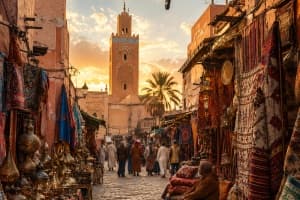
A busy market can be exciting: fresh herbs are piled high, bread comes out of ovens and grilled food fills the air with smoky smells. In Marrakech, Jemaa el-Fna attracts visitors for its evening atmosphere, while smaller markets across Morocco offer a calmer look at everyday shopping. Walk through first before choosing a place to eat. Compare displayed menus and ask the price before ordering, especially when stalls offer extras.
Street food is not automatically unsafe, and a restaurant is not automatically better because it has a smart entrance. Pay attention to how food is handled, whether hot dishes are served hot and whether the preparation area looks clean. If you are uncertain, choose something freshly cooked rather than food that has been sitting out. A guided food walk can help you find places that suit your tastes, but it is equally rewarding to explore a little independently at an unhurried pace.
- Agree on prices before accepting food or extras.
- Wash hands before eating and carry drinking water.
Food allergies, dietary needs and restaurant etiquette
Visitors with allergies should plan beyond memorizing the word for an ingredient. Recipes can vary between homes and restaurants, and a dish that seems safe in one place may use nuts, gluten, dairy or sesame elsewhere. Carry a clearly written allergy card in Arabic and French, and if the allergy is serious explain the risk rather than simply asking whether an ingredient is included. When a restaurant cannot confirm safe preparation, choose another option.
Restaurant customs are generally easy to understand. Greet staff, take your time, and use a spoon or fork if that feels comfortable even when others share bread. In many traditional homes people eat from a shared dish, normally from the area nearest them. If you are invited to a meal, watch what your hosts do and follow their lead. You do not need to copy every custom perfectly to be respectful; kindness and curiosity matter far more.
- Carry ingredient translations for serious allergies.
- Choose respectful questions over assumptions about unfamiliar dishes.
Keep planning your Morocco trip
Explore more local travel guides or ask Moorish Tour about a private route designed around your interests, dates and preferred pace.
Frequently Asked Questions
What is the most famous food in Morocco?
Tagine and couscous are among the best-known dishes, but local breakfasts, grilled food and cooked salads are also an important part of Moroccan food culture.
Is Moroccan food very spicy?
Many dishes are warmly seasoned rather than extremely hot. Heat varies, so ask about chili and sauces if you prefer mild food.
Can vegetarians eat well in Morocco?
Yes, especially with vegetable tagines, beans, lentils, bread and cooked salads, but confirm whether broth or garnishes contain meat.
What is a typical Moroccan breakfast?
Bread, olive oil, eggs, cheese, msemen, baghrir, coffee and tea are common choices, with plenty of local variation.
What should I know about food allergies?
Carry translated allergy details and ask directly about ingredients and cross-contact. Do not assume every menu lists all allergens.
You may also enjoy
Travel guideMarrakech Souks Guide: Shopping, Prices & Local Tips
Explore the Marrakech souks with confidence: what to buy, how bargaining works, where to find crafts, and practical tips for a relaxed medina visit.
 Travel guide
Morocco with Kids: A Complete Family Travel Guide
Planning Morocco with kids? Discover family-friendly cities, Sahara stays, food, travel times, packing advice, and relaxed routes for an unforgettable family holiday.