About this guide
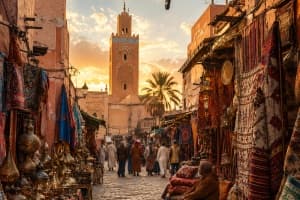
The souks of Marrakech can feel like an entire city hidden inside the city. One minute you are standing near the open square of Jemaa el-Fna, and the next you are walking beneath covered lanes where handmade lanterns, carpets, leather bags, colorful ceramics and baskets fill every corner. There is a rhythm to these streets: artisans at work, neighbors greeting each other, delivery carts moving carefully through crowds and shopkeepers inviting visitors to have a look.
For first-time travelers the markets can also feel confusing. Streets turn unexpectedly, prices are not always displayed and several shops may appear to sell the same object at very different prices. The best way to enjoy a visit is to slow down and treat the souks as a place to explore, not as a test of bargaining skills. This guide will help you choose what to buy, understand how prices work and move around more confidently.
Where are the Marrakech souks and how do you enter?
Much of the best-known shopping area spreads north of Jemaa el-Fna inside the old medina. From the edge of the square, lanes gradually become narrower and the market changes from open-air stalls to covered passages. Rue Semmarine is one well-known route into the shopping streets, but the area connects to many smaller lanes and squares. You do not need to follow only one route. Part of the pleasure is seeing how the type of goods changes as you walk.
Before entering, decide on a simple meeting point in case members of your group become separated. Save the location of your accommodation on your phone and carry its name or address. Maps can help, but some narrow passages do not match digital directions perfectly. If you are short on time or want to find specific workshops, a licensed local guide can help you make sense of the layout. Otherwise, take your time and explore without the pressure to cover everything in a single visit.
- Start from an easy-to-remember landmark.
- Allow time to wander rather than planning every turn.
What to buy: lamps, rugs, ceramics and leather goods
Moroccan crafts are varied, and Marrakech brings together objects made in different parts of the country. Lamps and lanterns are popular because of their metalwork and patterns of light. You will also see woven baskets, colorful pottery, wooden boxes, textiles, leather slippers and decorative trays. Many objects look beautiful in a shop, but think about how you will carry them home and whether they suit your space and daily life.
Carpets deserve particular care. Styles, materials and weaving techniques vary, and two pieces that look similar from a distance may be different up close. Ask where the carpet was made and whether it is wool, cotton or a mixture. For ceramics, consider weight and how breakable the pieces are. Leather goods should be examined for stitching and finishing. A simple purchase you truly love is usually a better souvenir than an expensive object bought because someone said it was rare.
- Inspect materials and workmanship before agreeing on a price.
- Ask about safe packing for fragile purchases.
How bargaining works without stress
In many souk shops, bargaining is a normal part of buying crafts. It does not need to be an argument, and there is no magic percentage that guarantees a fair price. The opening amount can depend on the item, quality, shop and seller. Start by asking questions and comparing similar goods in more than one shop. When you have a sense of the range, offer a price that feels reasonable to you and be prepared for a friendly conversation.
Keep the discussion polite and remember that walking away is acceptable. If you do not want to buy, a calm thank-you is enough. You should not feel obliged to purchase an item because a shopkeeper invited you to look or offered tea. At the same time, recognize the time and skill behind handmade products. A fair purchase is one where both sides understand the price and feel comfortable with the decision. In fixed-price shops, bargaining may not be appropriate.
- Compare products and quality before negotiating.
- Agree on the final amount and currency before paying.
Explore the destination
marrakech, Morocco
A closer look at artisan workshops
Some of the most interesting corners of the souks are the places where people still work. A metalworker may be shaping a tray, a carpenter may be finishing a small cabinet or a textile seller may explain the pattern in a woven fabric. These encounters make the market more than a shopping center. Ask permission before entering a workshop or taking photographs; a working space is not always a public attraction.
If a craft interests you, ask how it is made and what determines quality. Simple questions often lead to useful information and make the shopping experience friendlier. You may discover that an item was produced in a different city or that several family members specialize in different stages of the work. Do not expect every merchant to have time for a long conversation during a busy day, and respect a polite refusal if photography or a visit is not possible.
- Ask before taking close-up photographs of makers.
- Give working artisans room to move and continue their work.
Spices, oils and edible souvenirs
Spice displays can be beautiful, but appearance alone does not tell you everything about quality or freshness. If you want saffron, ras el hanout or another ingredient, ask where it came from and how it should be stored. Smell a sample when possible and buy a small quantity rather than filling your bag with products you have never cooked with. For oils and cosmetics, ask about ingredients, labels and whether the container can travel in checked luggage.
Food souvenirs require common sense. Choose products that are sealed properly, check the expiry date where available and consider the rules for bringing agricultural or food products into your home country. Fresh fruit, plants and some animal products may be restricted. If you are unsure, choose packaged tea, a durable kitchen item or a cookbook instead. The best souvenir is not necessarily the one that looks most exotic; it is the one you can use and remember.
- Check import rules in your home country before buying food souvenirs.
- Buy small amounts of spices until you know what you like.
Finding your way and avoiding common confusion
It is easy to become turned around in the old medina because passages look similar and signs are not always obvious. Take a screenshot of your route and notice distinctive doors, small squares or fountains. If you need help, ask at an established shop, cafe or your accommodation instead of following someone who approaches you and insists that the road is closed. Travelers should feel free to decline unwanted guiding services without entering an argument.
Crowded markets call for normal city precautions. Keep your bag closed, carry only the cash you expect to need and pay attention at intersections shared with bicycles or scooters. When taking photographs, step out of the main passage so you do not block people doing everyday work. If shopping begins to feel tiring, sit for a tea or return later. The souks are more enjoyable when you are not trying to see every street during the busiest hours.
- Keep a written copy of your accommodation address.
- Decline unsolicited guiding politely and move on.
The best times of day to explore the souks
Early hours can be pleasant for travelers who prefer a calmer atmosphere, although not every shop opens at the same time. Later in the day, shopping streets often become busier, and the evening atmosphere near Jemaa el-Fna feels different again. Weather matters too. During hot months, the shaded passages can offer some relief, but long walks through crowded areas are still tiring. In winter, mild midday temperatures may make browsing comfortable.
Try visiting once when you are not planning to buy anything. That first walk helps you understand the types of goods, ask questions and compare prices. Return later for a purchase after you have decided what you genuinely want. If you only have one afternoon in Marrakech, choose a small area to explore rather than rushing from one shop to another. A relaxed market visit often leads to better conversations and fewer impulse purchases.
- Visit once to look and compare before a serious shopping trip.
- Take regular breaks, particularly in the hotter months.
What to combine with a medina shopping day
The souks fit naturally into a wider Marrakech day. You might begin with a morning walk through historic streets, visit a palace or museum and then browse craft shops before lunch. Keep travel distances realistic; Marrakech may look compact on a map, but crossing busy areas on foot takes time. A garden visit or a peaceful riad courtyard can be a welcome break after a lively shopping session.
For travelers with an extra day, the city also works as a base for trips into the Atlas foothills or nearby valleys. Combining a busy market day with a quieter landscape day creates a comfortable balance. If you book a guided walking tour, tell the guide whether you prefer history, architecture, photography or actual shopping so the visit is not dominated by store stops. You are in control of how much time you spend buying souvenirs.
- Mix shopping with cultural stops and rest time.
- Tell your guide if you prefer a tour without shopping stops.
Keep planning your Morocco trip
Explore more local travel guides or ask Moorish Tour about a private route designed around your interests, dates and preferred pace.
Frequently Asked Questions
Do you have to bargain in Marrakech souks?
Not always. Bargaining is common for many crafts, but some stores have fixed prices. Ask politely and respect the stated policy.
What are good souvenirs from Marrakech?
Popular choices include pottery, woven baskets, textiles, small lamps and spices. Choose items you like and can transport safely.
Is it easy to get lost in the Marrakech medina?
The lanes are complex, but saving landmarks and an accommodation address helps. A local licensed guide is an option for a focused visit.
Can I photograph people in the souks?
Ask for permission before taking close-up photographs of people, especially artisans and shopkeepers at work.
What should I do if I feel pressured to buy?
Say no thank you, keep walking and take a break. You are free to decide whether you want to buy anything.
You may also enjoy
Travel guideWhat to Eat in Morocco: Traditional Food & Dining Guide
Explore traditional Moroccan food, from tagine and couscous to street snacks, mint tea and sweet pastries, with practical tips for ordering and eating in Morocco.
 Travel guide
Getting Around Morocco: Trains, Buses, Taxis & Drivers
Find the best way to travel around Morocco. Compare trains, buses, taxis, rental cars and private drivers, with practical advice for cities and Sahara routes.