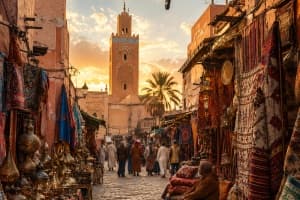
Is There a War in Morocco? Is It Safe to Visit in 2026?
Wondering if Morocco is at war or safe to visit? Understand 2026 travel advisories, regional security, Marrakech and Sahara trips, and practical planning tips.
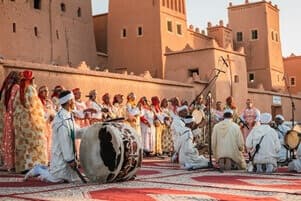
About this guide
If you are thinking about a Morocco holiday while seeing troubling news about wars and conflict elsewhere in the world, you may be asking a simple question: is Morocco at war, and is it safe to visit? The answer deserves more care than a quick yes or no. Morocco’s best-known tourism routes are not experiencing a nationwide war, but official travel advice still recommends caution, and particular border regions carry greater risks. Knowing that difference helps you decide whether a trip is right for you.
This guide was researched on November 6, 2026, using government travel advice from the United States, United Kingdom, Canada and Australia. We explain what the advisories actually say, how to think about travel to Marrakech, Fes and the Merzouga Sahara, what to know about Western Sahara and border areas, and how to plan flights, insurance and tours. We want tourists to feel informed and welcome—not pressured into ignoring safety concerns.
Is Morocco at war in 2026?
The short answer for visitors planning a holiday to the country’s familiar tourist destinations is that Morocco is not experiencing a nationwide war. Travelers planning time in Marrakech, Fes, Rabat, Casablanca, Chefchaouen or the well-established Merzouga desert area are not booking a trip to an active, countrywide battlefield. That distinction matters when headlines about wars and instability in other parts of the world make every unfamiliar destination feel uncertain. A map of an entire region can make places seem much closer together than they are, but the situation in one country should not automatically be used to describe what is happening in Morocco.
However, 'no nationwide war' is not the same as 'no security concerns.' Morocco faces the ordinary risks of international travel as well as the terrorism concerns described in several governments’ official advisories. There is also a long-running territorial dispute involving Western Sahara and specific militarized border areas. Those areas should not be confused with the normal city-to-city sightseeing routes promoted to visitors. If you want an accurate answer to whether Morocco is safe to visit in 2026, look at the route you will take, the latest advice issued for your passport, and any local news relevant to your dates rather than relying on a single reassuring headline.
- Morocco is not described by major government advisories as a country experiencing a nationwide war.
- Specific frontier and disputed areas have higher risks; examine your exact itinerary.
Why do global war headlines make travelers worry about Morocco?
Visitors often ask us whether events elsewhere in North Africa or the Middle East will affect their Morocco holiday. That is an understandable question. News reports cover a wide geographical area, and the words 'regional conflict' can sound as if every destination on the map has the same conditions. Yet a conflict involving other countries does not automatically mean there are hostilities in Marrakech, Fes or the Atlas Mountains. The right question is not whether you have seen the word 'war' on television, but whether your chosen destination, airport, route or travel provider is directly affected.
The effects of international conflicts can still travel indirectly. Airlines sometimes change schedules, routes or connection airports. Travel insurance rules may differ depending on when a booking was made and which events are covered. Demonstrations may be held in large cities, even when the destination itself is not at war. Before buying a ticket, check the airline’s latest itinerary, read your insurance policy, and make sure you have contact details for your hotel or tour operator. These practical checks are more helpful than either ignoring the news entirely or canceling a trip because of an event in another country.
- Check flights and transit countries separately from the safety of your destination.
- Avoid demonstrations and follow local instructions.
What do current government travel advisories say?
On November 6, 2026, the United States Department of State listed Morocco at Level 2, 'Exercise Increased Caution,' and identified terrorism as the reason. Canada advised travelers to exercise a high degree of caution overall and set stronger restrictions for particular border and Western Sahara areas. Australia likewise advised a high degree of caution, noting that higher levels apply in some areas. The United Kingdom’s FCDO advises visitors to read its country guidance, including security, crime, demonstrations, outdoor activities and regional risk information. These are real cautions, not a reason to pretend that all travel is unsafe or that every itinerary has exactly the same risk.
Travel advice is not a permanent promise. A page reviewed today can change because of new information next week. The rating applied to the whole country is also only the beginning; the detailed 'regional risks' section may contain restrictions that matter if you intend to drive near borders or explore remote desert roads. We recommend reading the official advisory linked at the end of this article, checking it again close to departure, and asking your tour operator about the precise towns, roads and overnight stops in your itinerary. A well-planned holiday should account for current guidance, not hide it behind marketing language.
- U.S. advisory: Level 2 as of September 4, 2026.
- Canada and Australia advise increased caution; stronger regional restrictions apply.
Explore the places
Places mentioned in this guide
Hover over a highlighted place name in the article to preview it, or select a destination card to read the full local guide.
Marrakech
Marrakech is one of Morocco’s historic imperial cities, known for its medina, colorful souks, Jemaa el-Fnaa square, traditional riads and gardens.
Explore this place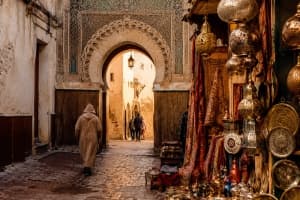
Fes
Fes is one of Morocco’s oldest imperial cities, famous for its historic medina, traditional crafts, ancient madrasas, narrow streets and rich cultural heritage.
Explore this place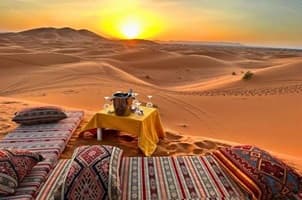
Merzouga
Merzouga is a desert village in southeastern Morocco beside the Erg Chebbi dunes, known for camel trekking, Sahara camps, sunsets and sunrise experiences.
Explore this place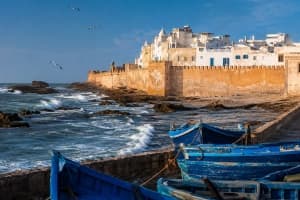
Essaouira
Essaouira is a relaxed Atlantic coastal city known for its historic medina, fishing port, beaches, traditional architecture and strong artistic atmosphere.
Explore this placeWhat about Western Sahara and Morocco’s border regions?
Western Sahara has an unresolved political and territorial status, and parts of the territory and nearby border regions present serious risks. Official Canadian guidance warns of military presence and unexploded landmines in parts of Western Sahara, particularly around the militarized Berm, and advises avoiding certain areas altogether. The border with Algeria is closed, and authorities advise avoiding nearby sensitive zones. This is important information for travelers considering very remote road trips, independent off-road drives or journeys across the far south.
The usual sightseeing routes from Marrakech to Ouarzazate, the Dades Valley, Todra Gorge and Merzouga are a different travel proposition from approaching militarized frontier areas. A licensed local guide can help you plan a recognized road route and avoid unnecessary detours, but a guide cannot remove all risk or override official restrictions. If you hope to explore far beyond the traditional tourist circuit, check the warnings for each region, confirm road conditions with local authorities and do not attempt cross-border travel because a map makes it look simple. It is better to shorten a route than to take an avoidable safety risk.
- Do not approach the closed Algeria border.
- Follow official restrictions for Western Sahara and the Berm.
Are Marrakech, Fes, Casablanca and Chefchaouen safe for tourists?
Morocco’s famous cities continue to be established travel destinations, with historic medinas, museums, markets, restaurants and hotels welcoming visitors. You can spend a morning in Marrakech exploring the old city, an afternoon in Fes watching artisans at work, or a relaxed day in Chefchaouen walking through its blue streets. Still, normal visitor precautions matter. Crowded market lanes, bus stations and busy squares are places where you should keep an eye on phones, wallets and bags. Use an official guide when you want someone to help navigate the old medina and agree on taxi fares or transport arrangements before setting off.
Demonstrations can take place with little notice, particularly in larger cities. Even peaceful gatherings may cause road closures or disruptions, so it is sensible to avoid them rather than stop for photographs. If you are visiting after dark, choose well-used streets and arrange a clear pickup point with your accommodation. Families and first-time travelers often appreciate a relaxed schedule with an arrival transfer, a local guide for the first medina visit and free time rather than an hour-by-hour timetable. These measures are useful regardless of what happens in global headlines.
- Choose recognized accommodation and licensed local guides.
- Take standard precautions around crowds and valuables.
Can tourists still visit Merzouga and the Sahara Desert?
For many travelers, the Sahara Desert is the main reason to visit Morocco. The golden Erg Chebbi dunes near Merzouga, the oasis scenery around Erfoud and the sunset colors across the sand are experiences people remember long after their trip. These are well-known tourism areas, but the desert adds practical considerations that are different from a city break. Temperatures vary widely by season, roads can be long, and some camp access tracks require suitable vehicles. An organized itinerary should explain the driving time, pickup location, planned camp facilities and options for guests who do not want to ride a camel.
We recommend sticking to recognized tourist routes rather than driving alone across remote stretches of desert. Check the weather, especially if heavy rain could affect roads or dry riverbeds, and carry drinking water and any medication you need. If you prefer a shorter road journey, ask about arriving through Errachidia rather than making the full drive from Marrakech. If your family includes young children or older travelers, ask about a 4x4 transfer, breaks along the way and the comfort level of your accommodation. The key is to choose the trip that fits your needs instead of treating every desert excursion as identical.
- Plan the desert journey around real driving times and seasonal weather.
- Confirm camp standards, transport and optional activities before booking.
See Morocco for yourself
Tours related to this guide
Prefer a planned route? These existing Moorish Tour itineraries visit some of the places described above.

3 Days Desert Tour from Marrakech to Merzouga
A 3 days desert tour from Marrakech to Merzouga is one of the most loved trips in Morocco. It is perfect for people who want to see the Sahara desert.
View day-by-day itinerary3 Days from Fes to Merzouga Desert via Erfoud
Travel from Fes to Merzouga on a 3-day desert tour via Ifrane, Midelt, Ziz Valley and Erfoud. Enjoy Erg Chebbi camel trekking, Sahara sunset and a desert camp.
View day-by-day itinerary
12 Days Tour from Casablanca to Marrakech
Explore Morocco in 12 days from Casablanca to Marrakech through Rabat, Chefchaouen, Volubilis, Fes, Merzouga, Dades, Ait Ben Haddou and Essaouira.
View day-by-day itineraryFlights, travel insurance and cancellations during uncertain times
Even when the destination itself is not affected by war, the flight path you take to get there can matter. Many visitors arrive through Marrakech, Casablanca, Fes or Tangier, while others connect through airports in Europe or elsewhere. Confirm the operating airline, connection country and schedule for the date you will travel. If news changes quickly, look at updates published by your airline or airport instead of relying on social media posts about unrelated destinations. It is wise to leave enough connection time and avoid booking a nonrefundable desert excursion immediately after a long, complicated flight.
Travel insurance is another important part of a comfortable holiday. Check the exact conditions for trip cancellation, disruption, medical treatment and evacuation, especially if you plan hiking, quad biking, camel trekking or other adventure activities. Policies may exclude losses linked to certain government advisories or events that were already known when you bought the coverage. Keep digital copies of your passport, confirmations and important phone numbers, and have a backup plan for delayed arrival. Practical preparation can help you enjoy the journey without turning a beautiful holiday into a constant search for bad news.
- Read the actual wording of travel insurance exclusions.
- Check airline updates for every segment of a connecting journey.
Beautiful places to include in a Morocco holiday
A good Morocco itinerary combines experiences instead of trying to race through every destination in a few days. Marrakech offers gardens, colorful souks, historic palaces and lively food stalls. Fes rewards travelers who enjoy heritage, traditional craft workshops and the feeling of an old city that is still very much alive. Along the Atlantic coast, Essaouira is known for sea air, a walkable medina and a slower pace. Chefchaouen adds mountain scenery and blue-painted streets, while Rabat and Casablanca can fit naturally into an arrival or departure route.
For travelers with more time, crossing the High Atlas toward Ait Ben Haddou, Ouarzazate and the valleys of the southeast makes the journey itself part of the experience. A desert night near Merzouga can be paired with stops in Todra Gorge, Dades Valley and the Ziz Valley. These places are not all close together, which is why the best tour is usually the one with enough time to enjoy them. A private driver is helpful for travelers who want flexible photo stops, while shared trips suit visitors happy to follow a fixed timetable and meet other people.
- Combine cities and landscapes, but leave enough time for long drives.
- Choose a route based on interests and travel pace rather than a checklist.
Advice for visitors from the USA, UK, Canada and Australia
Travel planning should begin with the passport you will use, not just the destination. Entry rules, passport validity requirements and consular services can vary by nationality. Travelers from the United States can consult the State Department advisory and enroll in STEP for updates. British visitors can follow the FCDO guidance and subscribe to its email notices. Canadians should review the Government of Canada travel advice and the warnings for particular regions. Australians can use Smartraveller and register their trip details where the government recommends. Check official entry requirements separately from security guidance because the two pages cover different questions.
If you are booking from abroad, send your tour operator your intended arrival city, flight number when booked, the number of travelers and whether you prefer private or shared transport. Do not share passport numbers in an unprotected public chat. Ask about the cancellation policy, the exact services included, and who to contact if your arrival changes. For guests unfamiliar with Morocco, having one clear contact person for airport pickup and the first hotel makes the start of the trip much easier. Good preparation supports a pleasant holiday without pretending that everything is completely predictable.
- Use your own government’s most recent advisory.
- Confirm transfers and cancellation arrangements directly before departure.
How a local tour operator can help you plan with confidence
A local Morocco tour operator can help translate your travel ideas into a realistic route, with sensible overnight stops and transport that fits the season. You may be choosing between a three-day Marrakech to Merzouga desert tour, a longer Casablanca to Marrakech circuit, or a private itinerary that includes northern Morocco. Different routes involve different driving hours, accommodation standards and levels of flexibility. Ask for a day-by-day description with expected pickup time, major stops and confirmed inclusions before paying a deposit.
At Moorish Tour, the goal is to help visitors enjoy Morocco’s landscapes and culture while making informed choices. You can ask about private transport, small-group trips, family-friendly desert arrangements or a revised itinerary if road or weather conditions change. We encourage travelers to follow the latest official advice rather than treating any tour company’s promotional page as a substitute for independent information. If you are unsure which route fits your dates, share your priorities and we can suggest a realistic plan, including time to relax instead of spending every day on the road.
- Request a written itinerary, clear inclusions and flexible options.
- Use official safety information alongside local travel advice.
Final thoughts: should you still plan a Morocco holiday?
It is reasonable to ask difficult questions about travel before spending money on a holiday. Morocco’s main visitor routes are not experiencing a nationwide war, but no destination is free of risk and certain sensitive frontier areas require much stronger precautions. That combination of facts is more useful than an article that says either 'everything is perfectly safe' or 'do not travel anywhere.' Check reliable official advice, compare routes, stay aware of your surroundings and make your bookings with enough flexibility to respond to changing information.
If your dream is to watch the sunset over the Sahara, explore the old medina of Fes, try fresh Moroccan food in Marrakech or enjoy a few relaxing days by the Atlantic, it is worth researching those experiences properly rather than allowing a headline from elsewhere to decide everything. Plan around your actual dates and the places you want to visit, ask detailed questions, and keep checking official updates until departure. With clear expectations and responsible planning, Morocco offers many opportunities for a rewarding trip.
- Travel plans should be informed by current facts and route-specific advice.
- No travel company can promise that circumstances will never change.
Keep planning your Morocco trip
Explore more local travel guides or ask Moorish Tour about a private route designed around your interests, dates and preferred pace.
Official travel advice to check before departure
This guide was researched on November 6, 2026. Advice can change, so always check official sources close to your travel date. These are independent government advisories, not guarantees of safety.
Frequently Asked Questions
Is Morocco at war in 2026?
Morocco is not experiencing a nationwide war on the main tourist routes discussed in this guide. However, some disputed and militarized border areas have significant risks and government advisories recommend caution.
Is Morocco safe for American tourists right now?
The U.S. State Department advisory issued September 4, 2026 lists Morocco at Level 2, Exercise Increased Caution, due to terrorism. Read its full advisory and monitor updates before departure.
Is Marrakech safe to visit during international conflicts?
Marrakech is an established tourist destination, but normal precautions apply, including vigilance in crowded places and avoiding demonstrations. Check current advice and local conditions for your travel dates.
Can tourists take a Sahara desert tour to Merzouga?
Merzouga is part of a well-known tourism region. Use an established operator, stay on recognized routes, confirm the weather and road conditions, and avoid sensitive border areas.
Is Western Sahara the same as the tourist desert at Merzouga?
No. Western Sahara is a separate disputed territory with regional travel warnings, while Merzouga and Erg Chebbi are established tourism destinations in southeastern Morocco.
Should I cancel my trip because of news about wars elsewhere?
Do not make a decision based only on unrelated headlines. Check the situation in your actual destination, flights and transit countries; review official advisories, insurance and cancellation terms before deciding.
Where can I find updated Morocco travel advice?
Consult official government sites such as the U.S. State Department, UK FCDO, Canada Travel Advice and Australia Smartraveller. This article provides direct links to all four.
You may also enjoy
 Travel guide
Getting Around Morocco: Trains, Buses, Taxis & Drivers
Find the best way to travel around Morocco. Compare trains, buses, taxis, rental cars and private drivers, with practical advice for cities and Sahara routes.
 Travel guide
Morocco with Kids: A Complete Family Travel Guide
Planning Morocco with kids? Discover family-friendly cities, Sahara stays, food, travel times, packing advice, and relaxed routes for an unforgettable family holiday.
 Travel guide
Morocco in Winter: Weather, Packing & Best Places to Visit
Planning Morocco in December, January or February? Learn about winter weather in Marrakech, Fes, the Atlas Mountains and Sahara, plus what to wear and where to go.