
Morocco at a Glance: Essential Travel Facts
Morocco is a country of contrasts. You can wander through the old streets of Marrakech, cross the High Atlas Mountains, discover small Amazigh villages and spend a night close to the Sahara dunes on the same holiday. This guide is written for people visiting Morocco for the first time, but it is also useful for returning travelers who want to discover another region.
At Moorish Tour, we help visitors turn general information into a comfortable route. Some guests want a short cultural stay, while others prefer a private journey between Fes and Merzouga, with more time for the desert and local experiences. Below you will find simple details about geography, seasons, traditions, money, transport, accommodation and the places worth visiting.
| Travel fact | What to know |
|---|---|
| Continent | Africa, at the northwestern corner of the continent |
| Capital | Rabat |
| Currency | Moroccan dirham (MAD) |
| Official languages | Arabic and Amazigh |
| Famous landscapes | Atlas Mountains, Atlantic and Mediterranean coasts, and Saharan regions |
| Popular visitor stops | Marrakech, Fes, Rabat, Casablanca, Chefchaouen, Essaouira and Merzouga |
| Useful planning tip | Allow enough travel time for the mountains and Sahara; Morocco is larger than a single city break |
Location of Morocco
Morocco is a country found in North Africa, in the far northwest of the continent. Its location makes it very special because it is very close to Europe, with only the Strait of Gibraltar separating the two continents. This short distance has helped Morocco stay connected with Europe for trade, culture, and travel for a very long time. Morocco has the Atlantic Ocean along its western side, which gives it long beaches and fishing towns, and the Mediterranean Sea in the north, which connects it to southern Europe. To the east, Morocco borders Algeria. The political status of Western Sahara is disputed, and travelers planning to visit that region should check current entry and travel advice. Because of this mix of sea and land connections, Morocco has always been an important crossing point for travelers, traders, and cultures moving between Africa, Europe, and the Middle East.
Morocco is often described as a meeting point between Africa and Europe. The Strait of Gibraltar separates northern Morocco from southern Spain, while the Atlantic shore connects cities, harbors and fishing communities. This position shaped trade, architecture and the mix of languages you hear today. Many travelers start their trip at airports in Casablanca, Marrakech, Fes or Tangier and then continue by road or rail.
When planning a route, remember that a map can make destinations appear closer than they feel on the road. Traveling from Marrakech to the Merzouga dunes includes mountain roads, scenic valleys and useful cultural stops, so a multi-day tour is much more enjoyable than trying to rush there and back in a single day.
Geography of Morocco
The geography of Morocco is one of the main reasons why so many travelers are interested in the country. Morocco has many different landscapes, and each region feels very different from the other. In the center of the country, the Atlas Mountains stretch from the southwest to the northeast. These mountains divide the country into different climate zones and are home to small villages, deep valleys, rivers, and high peaks. Some mountain areas receive snow in winter, which surprises many visitors who do not expect snow in Africa.
In the south and southeast, the land slowly changes into desert, leading to the Sahara. This area is known for its wide open spaces, golden sand dunes, and calm atmosphere. Life in the desert is slower, and people there have adapted to the hard environment over many generations. On the other side, the Atlantic coast offers long beaches, cliffs, and ports, where fishing has been a way of life for centuries. The Mediterranean coast in the north is smaller but very beautiful, with green hills and clear water. All these landscapes exist in one country, often just a few hours apart.
The High Atlas, Middle Atlas and Anti-Atlas each offer a different travel experience. The High Atlas is famous for high peaks and mountain villages; the Middle Atlas has forests and lakes near Ifrane; and the Anti-Atlas has rocky landscapes and distinctive southern towns. In the southeast, oasis towns such as Erfoud and Rissani lead toward the dunes of Erg Chebbi near Merzouga.
Not every Moroccan desert landscape has large sand dunes. Around Ouarzazate and Agafay you will see dry valleys and stony terrain, while Erg Chebbi is known for the tall golden dunes that visitors usually imagine when planning a Sahara trip. Knowing the difference helps you choose an excursion that matches your expectations.
Short History of Morocco
Morocco has a long history that goes back thousands of years. The Amazigh people were the first known inhabitants of the land, and their culture is still alive today in language, music, and traditions. Over time, many civilizations came to Morocco because of its location. The Phoenicians used the coast for trade, followed by the Romans, who built cities and roads that can still be seen in ruins today.
In the 7th century, Islam arrived in Morocco and became a major part of life, shaping laws, education, architecture, and daily habits. Powerful dynasties ruled the country and made Morocco a center of learning and trade. Cities like Fes and Marrakech became important cultural and religious centers. In the 20th century, Morocco was under French and Spanish control before gaining independence in 1956. Today, the country mixes modern life with deep respect for its past.
One enjoyable way to understand this long history is to visit different places rather than only read about dates. The Roman ruins of Volubilis show one chapter, the historic medinas of Fes and Marrakech show another, and old fortified settlements such as Ait Ben Haddou help explain trade and life along the southern caravan routes.
A good local guide can explain how Amazigh, Arab, Andalusian, Jewish and other communities shaped Moroccan food, music, cities and craftsmanship. History is visible in the narrow lanes of the medinas, but also in the markets, village architecture and daily traditions of modern Morocco.
If you are choosing where to begin, compare a one-week Morocco itinerary with our longer Morocco Wonders journey. Both show how to combine cities, mountains and the Sahara without trying to visit every region in one short trip.
Climate and Weather
Morocco has a varied climate, and this is important for travelers to understand. The weather changes a lot depending on where you are and what time of year you visit. Coastal cities usually enjoy mild temperatures, with fresh air coming from the ocean. Summers are warm but not extreme, and winters are soft and comfortable. In the mountains, the climate is very different. Winters can be cold, especially in high areas where snow falls, while summers stay cooler than the cities.
In the desert regions, the weather is more extreme. Days can be very hot, especially in summer, but nights often become cool or even cold. This contrast is part of desert life and shapes how people live there. Spring and autumn are often the best times to visit Morocco because temperatures are pleasant across most regions, making travel easier and more enjoyable.
The country does not have one single climate. Marrakech can be very warm while the High Atlas has cold mountain air; Essaouira may feel breezy on the same day that the inland valleys are hot. In the Sahara, strong daytime sunlight and cooler evenings mean you may need both breathable clothes and a warm layer on one tour.
Spring and autumn are usually comfortable choices for a trip that includes both cities and the Sahara. However, good travel dates depend on your interests: people who love mountain walking may choose a different season from travelers who prefer the Atlantic coast. Always check the forecast for your exact stops, especially before mountain hikes and desert activities.
| Season | What to expect | Good travel ideas |
|---|---|---|
| Spring (March–May) | Often pleasant for many city and desert routes; conditions still vary | Imperial cities, Atlas valleys, Merzouga dunes |
| Summer (June–August) | Strong inland and desert heat; the coast is often more comfortable | Essaouira, Agadir, early sightseeing and suitable mountain walks |
| Autumn (September–November) | Often mild after peak summer heat | Sahara camping, cultural circuits, photography |
| Winter (December–February) | Cooler city days, possible mountain snow and cold desert nights | City visits, selected desert trips with warm clothing |
Best Time to Visit Morocco for Desert, Cities and Mountains
If your dream holiday includes Marrakech, the Atlas Mountains and a night in the Sahara, consider March to May or September to November. These months often make long sightseeing days more comfortable. You can visit palaces in the morning, drive through mountain landscapes during the day, and watch the colors of the dunes change at sunset. The exact weather still depends on elevation and the year.
For a beach-focused trip, the Atlantic coast can be attractive in summer, although ocean breezes can feel strong, especially in Essaouira. Winter can suit travelers who prefer quieter historical visits, but high-altitude routes may be affected by snow or poor conditions. Moorish Tour can suggest a route based on your month, comfort level and the experiences you want most.
Seasonal planning
For the Sahara, spring and autumn are usually the easiest starting point. Summer daytime excursions should avoid the strongest heat, while winter camp stays need warm layers.
How to Dress for Morocco in Different Seasons
Pack for the places you will actually visit, not just the weather forecast for your arrival city. For Marrakech and Fes, comfortable walking shoes are especially important because old medinas involve narrow streets and uneven surfaces. In mountain areas, a light rain layer and warmer clothing can be useful even when the city feels hot.
For desert excursions, bring sun protection, a hat, sunglasses, water and a scarf that can protect you from dust. If you are staying overnight near Erg Chebbi, keep a warm top within easy reach. Modest, comfortable clothes are also practical for visiting villages, family homes and religiously important neighborhoods.
Before departure, read our Marrakech clothing and packing guide and compare our three-day trip ideas if you have limited time.
Culture and Traditions
3 desert days from fes to merzouga Moroccan culture is rich and deeply rooted in history. It is shaped by Amazigh, Arab, African, and European influences, which can be seen in daily life, music, food, and celebrations. Family plays a central role, and respect for elders is very important. Traditions are passed from generation to generation, especially in rural areas.
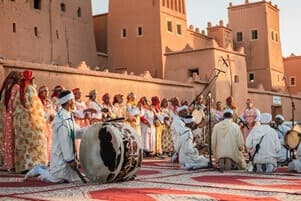
Hospitality is one of the strongest values in Moroccan society. Guests are treated with kindness, and sharing food and tea is a common way to welcome visitors. Festivals, weddings, and religious celebrations bring communities together and show the strong social bonds that exist in Moroccan life.
Morocco is a place where everyday encounters can become a favorite travel memory. A cup of mint tea, a conversation with a shopkeeper or a visit to a family-run workshop often reveals something that a quick photograph cannot. It is helpful to greet people before asking questions and to request permission before taking close-up photos of anyone.
In villages and smaller communities, visitors should respect private homes, local customs and dress expectations. If you join a meal or cultural visit, let your host explain what is appropriate. Responsible cultural experiences should support the people sharing their knowledge rather than treating their daily life as a performance.
“The most meaningful Morocco journey is not only about the places you see, but also about the people you meet and the stories you bring home.”
Languages Spoken in Morocco
Morocco is a country where many languages are spoken, which reflects its long and mixed history. Arabic and Amazigh are the official languages, and many people speak one or both at home. French is widely used in schools, offices, and business, especially in cities. In the north, Spanish is common because of historical ties, and English is becoming more popular, especially among young people and those working in tourism.
For travelers, this language diversity makes communication easier, especially in popular travel areas, where people are used to visitors from all over the world.
Moroccan Arabic, often called Darija, is heard in daily conversations, alongside Amazigh languages spoken across many regions. Standard Arabic appears in formal settings. French is also widely used in business and tourism, and Spanish is familiar in parts of the north. English can be helpful in popular tourism areas, although it should not be expected everywhere.
A few simple words show respect and can start a friendly conversation. Local guides can also help you understand place names, cultural expressions and the stories behind the traditions you see. If you are booking a private tour, ask in advance which guiding languages are available for the exact dates.
| Useful expression | Simple meaning |
|---|---|
| Salam alaykum | Hello / peace be upon you |
| Shukran | Thank you |
| Afak | Please |
| Labas? | How are you? |
| Bslama | Goodbye |
| La | No |
| Iyyeh | Yes (common Darija expression) |
Moroccan Food and Drinks
fes to merzouga Food is an important part of Moroccan culture and daily life. Meals are often shared, and eating together is a social moment. Moroccan dishes are known for slow cooking, rich flavors, and the use of spices like cumin, ginger, and saffron. Tagine is one of the most famous dishes, cooked slowly in a clay pot, while couscous is traditionally eaten on special days.
Bread is served with almost every meal and is used to pick up food. Mint tea is the national drink and is offered to guests in homes, shops, and even offices. Drinking tea is not just about the drink, but about taking time, talking, and connecting with others.
Beyond tagine and couscous, look for harira soup, pastilla, grilled brochettes, freshly baked bread, msemen and regional date sweets. The meals you find on the coast can differ from those prepared in the mountains or the southeast. Sampling food from more than one region is a simple way to discover how geography and history influence Moroccan cooking.
Food experiences can be part of your itinerary. In Marrakech or Fes, a local cooking activity can introduce seasonal ingredients and traditional techniques. In a desert guesthouse, dinner may be enjoyed after sunset with mint tea and bread prepared locally. Tell your tour organizer about food allergies or dietary needs before departure so that appropriate meals can be discussed with each accommodation.
Taste the local culture
Our Moroccan food guide explains popular dishes, spices and regional eating traditions in more detail.
Markets and Local Life
Markets, known as souks, are a big part of Moroccan life and culture. They are places where people buy daily food, clothes, tools, and handmade items. Souks are full of colors, sounds, and smells, and walking through them is an experience that shows real local life.
In old city centers, called medinas, life is very active. Narrow streets lead to small shops, homes, mosques, and cafes. These areas have stayed almost the same for hundreds of years, and they give travelers a chance to feel the rhythm of traditional Moroccan cities.
A souk is both a shopping place and part of a community. In Marrakech you may see lanterns, spices and carpets; in Fes you can find leather goods and pottery; and in a southern market you may see dates, fresh produce and household supplies sold to local families. Walking with a guide can help visitors understand different craft areas and shop with fewer misunderstandings.
If you want to buy something, ask about the material, origin and final price before agreeing. Bargaining is common in some markets but not in every shop. Keep small amounts of dirhams for simple purchases and remember that browsing respectfully is part of the experience. Buying from independent artisans can help local craftsmanship continue.
Food and local traditions are easier to understand when you experience them in person. Browse our Moroccan food tour guide or see our practical clothing advice before exploring local markets.
Tourism in Morocco
Tourism in Morocco is one of the most important activities in the country and plays a strong role in the economy and cultural exchange. Every year, millions of travelers visit Morocco to learn about its history, explore old cities, experience local life, and enjoy nature in different regions. Tourism in Morocco is not limited to one type of travel, as the country offers cultural tourism, desert tourism, mountain tourism, coastal tourism, and city tourism. This variety makes Morocco suitable for many travelers, including families, solo visitors, and small groups who want real experiences.
Tourism also supports local communities by creating jobs for guides, drivers, artisans, and small businesses. Many visitors choose responsible tourism options that respect local traditions and the environment. Through well-organized travel websites, visitors can find cultural experiences, desert activities, city tours, and nature visits that are managed by local people. This makes tourism in Morocco not only about visiting places, but also about building connections and understanding the country in a deeper and more meaningful way.
Morocco is suited to many different kinds of holidays. A first-time visitor might combine historic cities with a Sahara tour, while a returning visitor might spend more time in the mountains, explore fossil workshops near Erfoud or discover villages beyond the main travel routes. Families may prefer private transport and fewer hotel changes; couples may prioritize relaxed riads and sunsets; friends may enjoy shared activities and lively city visits.
Moorish Tour focuses on planning practical routes that combine comfort with genuine local experiences. For example, a Marrakech desert tour can include the Atlas Mountains, Ait Ben Haddou, Dades Valley and Merzouga. A Fes desert tour takes a different road through the Middle Atlas and the Ziz Valley. Travelers can also explore Morocco itineraries before requesting a personalized plan.
Choosing a local guide or driver can be especially useful when the itinerary includes remote desert areas, mountain roads or more than one city. Good planning should set clear expectations for driving time, accommodation style, meal inclusions and the level of physical activity. That way, your visit supports local tourism while remaining enjoyable for everyone in your group.
| Experience | Good starting point | What you can discover |
|---|---|---|
| Imperial cities | Marrakech, Fes, Rabat | Medinas, palaces, crafts and history |
| Sahara dunes | Merzouga / Erfoud | Camel trekking, 4×4 excursions and desert camps |
| Mountains | Imlil / High Atlas | Village walks, scenery and hiking |
| Coastal travel | Essaouira / Agadir | Fishing ports, beaches and ocean walks |
| Heritage and geology | Ait Ben Haddou / Erfoud | Kasbah architecture and fossil workshops |
Famous Cities in Morocco
morocco tours from marrakech Morocco has many cities that attract travelers from all over the world. Marrakech is known for its lively atmosphere, markets, gardens, and historic buildings. Fes is famous for its ancient medina and long history as a center of learning. Casablanca is the largest city and represents modern Morocco with business, industry, and coastal life.
Rabat, the capital city, is calm and organized, with historical sites and green spaces. Chefchaouen attracts visitors with its blue streets and mountain setting, while Tangier has a long international history and a special position between Africa and Europe.
The best Moroccan cities to include depend on your route. Marrakech is a lively introduction to old markets and gardens; Fes is excellent for history and traditional crafts; Rabat has museums, monuments and a calmer atmosphere; and Casablanca offers a look at contemporary urban life as well as the Hassan II Mosque. Each city gives you a different part of the country’s story.
In the north, Tangier offers coastal views and international history, while Chefchaouen is loved for blue-painted lanes and the Rif Mountains. If your route has extra days, Meknes and nearby Volubilis are interesting additions for travelers who enjoy architecture and archaeology.
Marrakech and Fes: Two Different Medina Experiences
Marrakech is often the first stop on a Morocco journey. Its central square, Jemaa el-Fnaa, busy souks, Bahia Palace and gardens offer a lively mix of old and new. It is also a popular gateway for Atlas Mountain excursions and longer trips toward the Sahara. Give yourself time to enjoy a market street or courtyard rather than trying to rush through every attraction in one afternoon.
Fes feels different. Its old medina is a network of craft workshops, traditional schools, religious buildings and family businesses. A local walking guide is particularly helpful for understanding the city’s history and finding your way through the smaller lanes. Travelers who enjoy traditional architecture and craftsmanship often appreciate spending more than one night there.
Getting Around Morocco: Train, Bus, Driver or 4×4?
Morocco has rail links between several large cities, long-distance buses and local taxi services. These options can work well for people visiting major urban areas. However, trains do not reach the Merzouga dunes, and the most scenic southern routes include many places that are not simple to reach by public transport.
A private driver or planned tour can be convenient if you want to travel from Marrakech to the Sahara through Ait Ben Haddou and the Dades Valley, or from Fes toward the Ziz Valley and Merzouga. A 4×4 may be useful for approved off-road desert tracks, while normal paved sections do not always require it. Choose transport according to the real route, not just the word “desert” on a brochure.
| Transport | Best for | Remember |
|---|---|---|
| Train | Travel between some major cities | Does not reach Merzouga or many mountain villages |
| Intercity bus | Budget-conscious city-to-city trips | Allow for luggage and transfer time |
| Private driver | Flexible multi-stop sightseeing | Confirm schedule, vehicle and inclusions |
| 4×4 desert vehicle | Suitable approved off-road desert routes | Use an experienced local driver and respect protected areas |
Passport, Visa and Entry Information for Morocco
Entry requirements depend on your nationality, passport, travel purpose and length of stay. Some visitors can travel without a tourist visa for a permitted period, while others need a visa or electronic authorization. The official information may change, so do not rely on an old blog post or advice meant for another nationality.
Before buying non-refundable tickets, check your passport validity, the rules that apply to your nationality and the official Moroccan travel formalities guide. Travelers who need to check an electronic visa or authorization can use the official Acces Maroc portal. If you are traveling with children, also check any documentation needed for their trip.
Important travel requirement
We do not give a single visa rule for all travelers. Check the official rules for your nationality before departure and again close to your travel date.
Moroccan Currency, Cash and Card Payments
The currency is the Moroccan dirham (MAD). Many hotels and larger businesses accept cards, but smaller cafés, market stalls and rural stops may prefer cash. It is useful to have smaller notes for shopping, tips, occasional entrance payments or refreshments during a long drive. ATMs and official exchange facilities are available in cities, but access is more limited in small desert settlements.
Travel budgets vary greatly depending on season, private or shared travel, accommodation level and the activities you include. Rather than depending on a single daily price, ask for a written quote that separates transport, guides, accommodation, meals and entrance fees. The official tourism website also has a currency explanation.
Accommodation in Morocco: Riads, Hotels and Desert Camps
A riad is a traditional Moroccan house built around an inner courtyard or garden. Many have been turned into small guesthouses, especially in Marrakech and Fes. They are often a lovely choice for travelers who want to experience historic architecture while staying close to the medina. Larger hotels may be convenient for travelers who prioritize lifts, parking or modern facilities.
In the Sahara, accommodation is a different kind of experience. Desert camps range from simple tents to more comfortable options with private bathrooms. Camp facilities, access methods, heating, cooling and meal inclusions differ, so always check the exact camp before booking. If you prefer not to ride a camel, ask whether a vehicle transfer is possible.
How Many Days Do You Need in Morocco?
A three-day visit can give you a taste of Marrakech, Fes or a nearby region, but it cannot comfortably show the entire country. If you want to see the real Sahara dunes from Marrakech, allow a multi-day journey; the mountain road and cultural stops are part of the experience. A week offers space for a more focused route, while ten to fourteen days can cover several cities, the mountains and the desert at a better pace.
For example, a short Marrakech break can focus on medinas, food and the Atlas foothills. A longer journey might start in Casablanca, include Rabat and Fes, continue to Merzouga, and return to Marrakech through the Dades Valley and Ait Ben Haddou. The best itinerary is the one that leaves enough time to enjoy each place.
| Time available | Suggested focus | Travel style |
|---|---|---|
| 3–4 days | One city and a nearby area, or a fast multi-day Sahara trip | Focused and selective |
| 5–7 days | Marrakech, Atlas Mountains and southern highlights | A balanced regional tour |
| 8–10 days | Imperial cities and Sahara with several scenic stops | Classic first-time route |
| 12–14 days | North, imperial cities, Sahara, mountains and coast | Wider discovery with more flexibility |
To choose the best route, see all Morocco tour packages, our seven-day travel plan, and the Moorish Tour grand journey.
The Sahara Desert
3 days from fes to merzouga desert The Sahara Desert is one of the most powerful travel images of Morocco. The endless dunes, quiet nights, and wide skies create a strong feeling of space and freedom. Desert life has shaped strong traditions, music, and ways of living that continue today.
For many travelers, the golden dunes around Erg Chebbi near Merzouga are the picture they have in mind when they dream of Morocco. A well-planned desert stay can include a sunset walk, camel trekking, a 4×4 drive on suitable tracks, stargazing and a peaceful overnight stay at a camp. Not every activity is included in every package, so it is worth checking the exact program.
The experience is not only about beautiful sand. The wider Tafilalet region includes palm oases, villages, a long trading history and the fossil heritage around Erfoud. If you have more time, you can visit local workshops, discover traditional music in Khamlia and learn about how communities have adapted to the desert environment.
“The Sahara is often the quietest part of a Morocco journey. Give yourself time to enjoy it, not only to photograph it.”
Erfoud, Merzouga and Erg Chebbi: Which Place Should You Visit?
Erfoud is a practical base in the southeast and is especially well known for local fossil workshops and access to the Tafilalet region. Merzouga is the village travelers often use to reach the towering dunes of Erg Chebbi. The names are closely connected, but they do not describe exactly the same experience: Erfoud is a town and regional starting point, while Merzouga and Erg Chebbi place you much closer to the sand dunes.
If you are staying in Erfoud, you can arrange a local 4×4 excursion toward Merzouga and decide whether to return the same day or add a night at a desert camp. If you are coming from a farther city, Errachidia desert tours and Fes to Sahara routes can help you understand the different travel options.
Camel Trekking, 4×4 Desert Tours and Overnight Camps
A camel trek across the dunes is a peaceful, traditional-style activity, especially close to sunset. A 4×4 excursion is different: it can take you across suitable desert tracks to scenic areas, villages and cultural stops around Merzouga. Both experiences can be included on the same trip when timing and conditions allow. If you have mobility concerns or do not want to ride a camel, discuss alternatives in advance.
An overnight stay allows you to enjoy the desert after day visitors leave and see the light change again at sunrise. You can read more about camel trekking in the desert or explore our luxury travel options for ideas about different comfort levels. Remember that desert temperatures can change greatly between day and night.
| Sahara experience | Main highlight | Best suited to |
|---|---|---|
| Camel trekking | Slow journey across the sand and sunset views | Travelers who enjoy a gentle traditional-style activity |
| 4×4 excursion | Explore selected tracks and surrounding communities | Visitors who want more places in one day |
| Overnight desert camp | Evening atmosphere, stars and sunrise | Travelers with at least one night available |
| Fossil and oasis visit | Local craft, geology and palm landscapes | Families, culture lovers and curious travelers |
For a deeper desert stay, read our Merzouga luxury desert camp guide, explore Erfoud 4×4 desert experiences, and discover birdwatching in Morocco.
Mountains, Coast, and Hospitality
The Atlas Mountains, coastal towns, and countryside villages all show different sides of Morocco. Mountain areas offer nature, calm life, and traditional homes. Coastal towns mix sea life with relaxed rhythms. Across all regions, Moroccan hospitality remains the same. People enjoy welcoming guests, sharing meals, and telling stories.
The mountain region is a wonderful contrast to the Sahara. Depending on the route, you can see terraced fields, rivers, villages and dramatic viewpoints. Many visitors enjoy a short guided walk around Imlil or the Ourika Valley, while experienced hikers may prefer a longer mountain program. Conditions can change quickly at altitude, so suitable footwear and a qualified mountain guide matter for more demanding routes.
The coast is another side of the country. Essaouira has a historic medina and fishing port, while Agadir is known for beaches and a relaxed seaside atmosphere. These places can be enjoyable breaks after long inland travel days and can help balance an itinerary that includes both cultural sightseeing and outdoor activities.
Respectful Travel in Amazigh Villages and Natural Areas
Many travelers hope to meet local people during their trip, but good cultural tourism needs respect and consent. Ask before photographing families or private homes, follow local guidance during village visits and avoid treating rural communities as attractions. You can support families and artisans by choosing local guesthouses, workshops and fair purchases.
In desert and mountain environments, take rubbish back with you and avoid damaging fragile plants or leaving marked tracks without a local guide. Off-road driving should follow suitable routes, and visits to protected areas may have access rules. A responsible trip helps preserve the same landscapes and traditions that make Morocco special.
Traveling in Morocco with Family, Friends or as a Couple
Morocco can be adapted to different travel styles. Families often appreciate comfortable transport, shorter sightseeing blocks, plenty of breaks and accommodations that suit their children. Couples may prefer peaceful riads, relaxed city visits and a special desert evening. Friends may enjoy a mixture of cooking experiences, cultural walks and outdoor activities.
The important part is to set a realistic pace. Tell your organizer about the age of children, walking ability, dietary needs, luggage and any activities you want to avoid. A private itinerary can make it easier to adjust the day without missing the places that matter most.
What to Pack for Your First Trip to Morocco
Bring comfortable walking shoes, light layers, sun protection, a reusable water bottle and a small day bag. For medinas, light clothing and shoes with good grip are useful. For the mountains, pack a warmer layer and weather protection; for the Sahara, include a scarf for dust, sunscreen and clothing for cooler evenings. Do not forget necessary personal medication and chargers.
It also helps to keep digital and offline copies of important bookings, emergency contacts and travel documents. Before leaving, check whether your mobile provider offers roaming or whether a local SIM or eSIM will suit your needs. Carry some dirhams for small local payments rather than expecting every market stall to accept cards.
- ✓ Passport and any required entry documents
- ✓ Comfortable shoes and breathable day clothes
- ✓ Warm layer for mountain or desert evenings
- ✓ Hat, sunglasses, sunscreen and refillable water bottle
- ✓ Phone charger, power adapter and copies of bookings
- ✓ Small cash for markets, tips and rural stops
If you enjoy quieter natural places, discover our birding holidays and wildlife sites. For a route that links mountains and the Sahara, compare our desert tours from Marrakech.
Why Morocco Is a Popular Travel Destination
Morocco attracts travelers because it offers many experiences in one country. History, culture, nature, and human connection come together in a unique way. Visitors can learn, relax, and explore at the same time.
What makes Morocco attractive is not one single attraction but the variety you can enjoy during a well-planned trip. You can learn about architecture in a historic medina, see the Atlas Mountains, visit a family-owned workshop, enjoy fresh coastal food and watch the sun set over Sahara dunes. Each region has its own pace, flavors and scenery.
The most enjoyable holiday is often the one designed around your interests. Some visitors want history and food, others want photography and quiet nature, while others dream of crossing the country on a private tour. Moorish Tour can help connect these experiences into a practical route, with time for the moments that make Morocco feel personal.
Plan Your Morocco Trip with Moorish Tour
If this guide has helped you decide what to see, the next step is to turn your ideas into a realistic itinerary. Tell Moorish Tour your arrival city, available days, number of travelers and the experiences you care about most. We can help you explore options for Marrakech, Fes, the High Atlas, Erfoud, Merzouga and the beautiful valleys of southern Morocco.
Start by browsing our Morocco tours or plan your Morocco tour page. If you want a customized desert experience, you can also explore our Marrakech desert tours and Fes desert tours. The goal is simple: make the journey comfortable, varied and memorable without filling every day with unnecessary driving.
A practical first step
Choose your number of days and your two or three most important places. We can help you build the route around those priorities instead of trying to squeeze everything into one trip.
Frequently Asked Questions About Visiting Morocco
These short answers cover questions that travelers often ask before their first trip. For anything that can change, such as entry requirements, attraction opening hours or weather conditions, check the latest official guidance before you travel.
Do I need a visa to visit Morocco?
It depends on your nationality and travel documents. Check the official Moroccan travel formalities website and the Acces Maroc portal before booking.
What is the best time to visit Morocco?
Spring and autumn are often comfortable for routes combining cities and the Sahara. Summer can be very hot inland, and winter nights can be cold in the desert and mountains.
What currency is used in Morocco?
The Moroccan dirham (MAD). Cards are accepted in many larger businesses, but cash is useful for markets and smaller stops.
How many days do I need for a Morocco trip?
Three or four days works for a focused city or regional break. Seven to ten days gives more room for cities, mountains and the Sahara; longer trips can include the coast and northern Morocco.
Can I see the Sahara Desert from Marrakech in one day?
The famous Erg Chebbi dunes near Merzouga are a long journey from Marrakech. A multi-day tour is usually a much better choice than a day trip.
Is Morocco suitable for family travel?
Many routes can be planned for families. Choose suitable accommodation, realistic driving times, age-appropriate activities and clear supervision arrangements.
Can Moorish Tour arrange a private Morocco itinerary?
You can request a personalized tour built around your dates, starting city, destinations and preferred comfort level. The exact services and price are confirmed in your tour proposal.
Moorish Tour can help you turn these ideas into a realistic route. Start with the custom Morocco tour planner or explore available tour styles and destinations before asking for a personal itinerary.