
START HERE
Erfoud Fossils for Sale in Morocco: A Simple Buyer’s Guide
Step inside a fossil workshop in Erfoud and you may see something surprising: dark stone slabs with curled shells, delicate trilobites and patterns that look like small pieces of the sea. Outside, the landscape is dry and sunny. Inside, the stone tells a story about ancient water, changing continents and animals that disappeared millions of years ago. It is one of the most memorable discoveries visitors can make in southeastern Morocco.
This guide from Moorish Tour explains which fossils people commonly find for sale, how local workshops prepare them, what to ask before paying, and how to plan a short visit. You do not need to be a scientist or a serious collector. A little curiosity—and a few good questions—can turn an ordinary souvenir stop into a real learning experience.
If you are planning a wider journey in Morocco, you can combine the fossil workshops in Erfoud with Erfoud Sahara excursions and a stay near the Merzouga desert. The best souvenir is not necessarily the largest piece. It is a specimen with a clear explanation, honest condition details and a story you can remember.
FAST ANSWER
What Fossils Can You Buy in Erfoud?
Fossil workshops and shops around Erfoud commonly show trilobites, ammonites, straight-shelled cephalopods often sold under the trade name “Orthoceras,” crinoids and polished fossil-bearing limestone. You may also encounter fossil teeth, minerals, decorative stone objects and very large carved pieces. Not every item sold in town was discovered beside the town itself: Moroccan fossil trading networks bring specimens from different geological regions.
For a beginner, a clearly identified ammonite or a small fossil-bearing polished stone may be easier to enjoy than an expensive, heavily restored trilobite. A collector who wants scientific information should ask for the most specific supported provenance and a full description of repairs. A traveler who prefers home decoration may care more about stone finish, size and safe transport.
Whatever your budget, inspect the piece in daylight, ask whether any part was reconstructed, and request a receipt with the seller’s details. For items leaving Morocco, confirm the applicable permissions with the relevant authorities before buying.
| Fossil or product | Why buyers like it | What to ask |
|---|---|---|
| Trilobite | Detailed ancient marine arthropod | Is the head, body or spine restored? |
| Ammonite | Recognizable spiral form | Where was it found, and was it repaired? |
| Straight-shelled cephalopod | Graphic patterns in polished stone | Is “Orthoceras” a trade label here? |
| Crinoid | Beautiful sea-lily stem patterns | Is the fossil natural or assembled? |
| Fossil stone table or sink | Decorative local stone craftsmanship | How is it sealed, packed and shipped? |
GEOLOGY MADE SIMPLE
Why Is Erfoud Famous for Fossils?
Long before today’s desert roads and palm groves, parts of what is now southeastern Morocco were covered by shallow seas at different times. Marine animals lived there, died, and were sometimes buried in mud or sand. Over very long periods, sediment became rock. In suitable conditions, hard shells and skeletons left impressions or mineral-rich remains that people can now recognize as fossils.
There is no single age for all fossils sold in Erfoud. Trilobites come from much older periods than the ammonites familiar from later seas, and some fossils displayed in local markets are sourced from other Moroccan regions. That is why a seller who simply says “500 million years old” for every object has not yet given you a reliable identification.
The town also matters because generations of local workers have developed skills in sawing, cleaning, preparing and polishing fossil-rich stone. Workshops make geology visible to visitors. A good demonstration can show the difference between exposing a natural fossil and producing a decorative finish, while explaining why both kinds of work require care.
ANCIENT MARINE LIFE
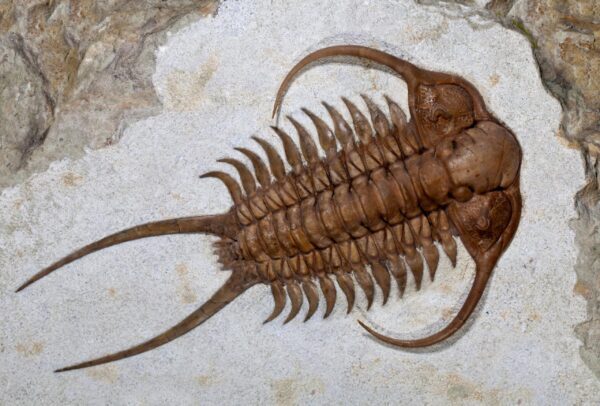
Moroccan Trilobites for Sale: What You Should Know
A trilobite is an extinct marine arthropod, not a dinosaur. Its body has three lengthwise lobes and many visible segments, which is where the name comes from. Trilobites lived for hundreds of millions of years before disappearing at the end of the Permian period. Moroccan fossils can preserve a remarkable amount of detail, including compound eyes, fine ridges and sometimes spines.
It takes skill to remove a trilobite from its surrounding rock. Some excellent specimens are naturally incomplete, while others have missing areas filled or repaired so they look more attractive on display. Restoration is not automatically a reason to reject an item. What matters is whether the seller explains it clearly and the price reflects the true condition.
If you are buying your first trilobite, compare several examples and look at the fossil from the side as well as from above. Ask what proportion is original, whether the head and tail belong together, and if there are photographs from the preparation process. For rare or costly pieces, independent expert assessment is worth considering.
THE SPIRAL FOSSIL
Ammonites from Morocco: Beautiful Shells with a Long History
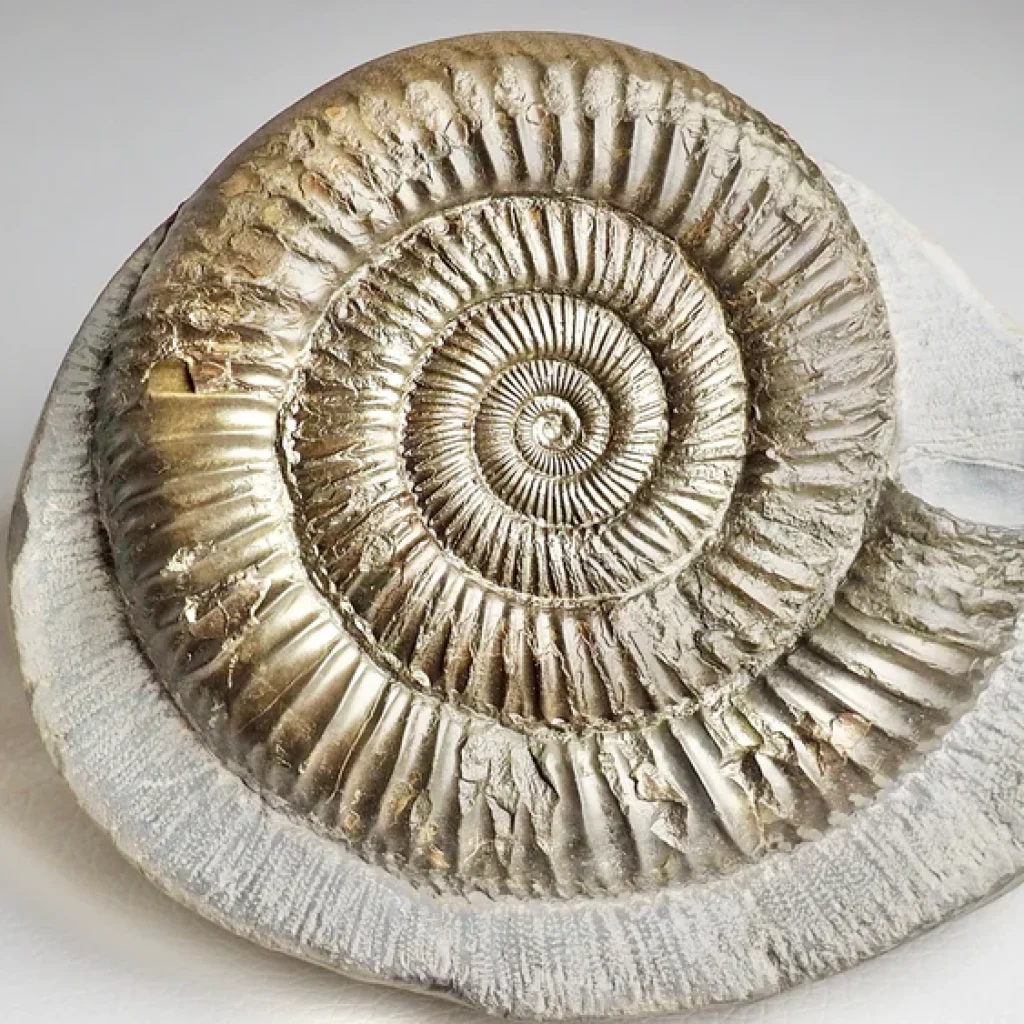
Ammonites are famous for their spiral shells, which look like carefully drawn circles in stone. These animals were marine mollusks related to modern cephalopods. Their shells grew in chambers as the animal became larger. Ammonites lived in ancient oceans and the last ammonites disappeared about 66 million years ago.
You can find fossil ammonites prepared in several ways: as natural specimens still in rock, polished halves that show internal chambers, or decorative pieces set into larger slabs. Some reveal mineral-filled spaces and interesting colors. A polished specimen can be attractive without being rare. Its value depends on more than shine; completeness, provenance, preparation quality and honesty about repairs all matter.
When comparing ammonites, ask the seller to point out the original shell, the surrounding rock and any filled cracks. If you plan to carry one home, choose a practical size and protect the fragile edges. You may also enjoy comparing them with the fossils of other marine animals seen on desert journeys from Marrakech.
BEYOND AMMONITES
Orthoceras, Crinoids and Fossil-Rich Decorative Stone
Many visitors notice black stone objects filled with pale, straight shapes. The shapes are often fossilized shells of ancient cephalopods. Shops commonly call them “Orthoceras,” although that word can be used loosely in trade and may not provide a precise genus identification. If the exact science matters to you, ask what has actually been identified and what is only a familiar shop name.
Crinoids, sometimes called sea lilies, are also marine animals. Many fossil pieces preserve their stems as stacked circular segments, giving polished stone a beautiful repeating pattern. Some decorative slabs contain several kinds of fossil fragments together. The result can be striking on a small tray, tabletop or wall piece.
Decorative cutting and polishing are local crafts, but the finish can hide repairs, joined sections or filler. Examine the back, edges and joints. If the object is a table, basin or large sculpture, ask about its weight and how the piece will be supported at home. A beautiful item is only a good purchase when you know how to use and transport it safely.

A NOTE FOR COLLECTORS
Dinosaur Teeth and Shark Fossils: Buy with Extra Care
Dinosaur fossils attract attention because everyone recognizes the name. Some shops show isolated teeth or bone fragments attributed to animals from ancient river systems farther south. Sharks also left fossil teeth in deposits from different parts of the country. These objects may be interesting, but the label attached to one specimen can be more confident than the evidence allows.
Expensive vertebrate material deserves extra caution. Ask for clear provenance, identification by someone qualified and written documentation showing lawful origin and any permission required for sale or export. Do not assume that a fossil is legally transferable just because it is displayed openly in a shop. Avoid pieces with unclear origin, especially rare or scientifically important material.
For most casual visitors, well-described marine fossils or decorative pieces are a simpler starting point. They can still be fascinating, and they give you a chance to learn about Morocco’s geological past without making an uncertain high-value purchase.
REAL, REPAIRED OR REPLICA
How to Tell if a Moroccan Fossil Is Genuine
The question “Is this real?” often needs a more detailed answer. A specimen can be genuine and fully natural; genuine with repaired cracks; genuine with reconstructed parts; assembled from several specimens; or entirely artificial. Those are different conditions, and an honest description should make the distinction clear.
Start with simple observations. Look closely at the edges where the fossil meets the surrounding stone. Are color, texture and shape consistent? Is the same pattern repeated in a way that looks cast? Do spines or delicate parts have a different finish? These are clues, not proof. Skilled replicas can fool an inexperienced eye, and authentic fossils may have neat preparation marks that look unusual.
Ask the seller to explain the work that was done and, if possible, show a photograph taken during preparation. You can bring a small magnifier and take your time. For an expensive specimen, do not rely only on weight, roughness, smell, UV light or a certificate printed by the seller: none of those on its own guarantees authenticity.

SHOPPING WITH CONFIDENCE
Seven Questions to Ask Before You Buy a Fossil
A good conversation can reveal more than a quick price comparison. Begin with the most basic question: what kind of fossil is this? Then ask where it was collected, whether the origin is known precisely or only broadly, and whether the specimen has been repaired. If you like a display piece, find out whether it is one natural slab or an assembly.
Ask how the seller determined its age. A date should relate to the rock formation and fossil identification, not be chosen because it sounds impressive. If a shop cannot explain the information, you can still enjoy looking at the piece without buying it. There is no need to rush your decision.
Finally, discuss the receipt, safe packing and the legal paperwork required if the fossil will travel to another country. For valuable objects, request the answers in writing. If the answers change each time you ask, consider choosing another specimen.
Useful checklist
- What type of fossil is this?
- Where was it found, and how certain is that origin?
- Which parts are real, repaired or reconstructed?
- Is this one specimen or a composite?
- What evidence supports its estimated age?
- Will I receive an itemized receipt and accurate photos?
- What legal documents are needed to take it abroad?
IN THE WORKSHOP
How Erfoud Fossil Workshops Prepare Stone
One of the most enjoyable parts of visiting Erfoud is watching a workshop in action. The process can start with a rough block that gives little away about what is hidden inside. The worker examines the surface, chooses a direction for cutting and begins carefully exposing the features that make the fossil interesting. Delicate specimens may require slow, detailed preparation using specialist tools.
Decorative workshops handle stone differently. Workers cut slabs, shape edges, polish surfaces and sometimes assemble pieces into tables, sinks or ornaments. Some processes make a natural fossil easier to see; others are about creating a finished home object. During a visit, it is worth asking which steps are cleaning, which are restoration and which are decorative fabrication.
A respectful workshop visit is also an opportunity to appreciate local skill. Ask before taking photographs, keep your hands away from cutting machines and allow workers to explain the process without interrupting. If you are touring the area, a stop can fit naturally into an Erfoud-to-Merzouga excursion.

BUYING A SOUVENIR
Best Fossils for Beginners, Gifts and Home Decor
The ideal fossil depends on the person who will enjoy it. A beginner may prefer a small, clearly labeled ammonite with its shell visible. A child who loves science may enjoy a simple fossil with a short explanation of the ancient animal. A collector might prefer a less decorative but better documented specimen. Someone furnishing a home may be looking for a polished stone bowl or a carefully finished tabletop.
Choose a size that suits your plans. A small specimen is easier to pack, display and examine. Heavy, polished stone looks beautiful in a showroom, but it can require special shipping and structural support at home. When comparing two pieces, look at condition, workmanship, documentation and the story behind them rather than choosing the largest object.
A good fossil souvenir should still be enjoyable years later. Keep its receipt and any reliable information about its origin. Display it away from accidental knocks and keep a record of repairs or restoration, so you can explain it honestly to the next person who admires it.
First-time visitor
A small ammonite or clearly identified marine fossil with simple documentation.
Science lover
A specimen that keeps natural details and has a believable locality and age.
Home decoration
A stable, well-polished slab or small object with clear care instructions.
Serious collector
A piece with detailed provenance, restoration disclosure and an expert assessment when necessary.
COSTS WITHOUT HYPE
Erfoud Fossil Prices: What Really Affects the Cost?
There is no honest single price list for every fossil sold in Erfoud. Small, common prepared pieces and very large display objects belong to completely different markets. A trilobite with delicate original features may take far more preparation work than a smooth polished slice of fossil-bearing stone. Provenance, completeness, condition, restoration, workshop labor and demand can all affect the asking price.
Ask for a clear price on the specific item in front of you, preferably written on the invoice. Check whether packing, delivery, customs paperwork and shipping are included or charged separately. A seller’s first offer is not an independent appraisal of scientific or collector value, and the highest price does not automatically mean the best fossil.
Bargaining can be part of the local shopping experience, but it works best when both sides are respectful. If you are unsure what a specimen is, compare several examples and come back after learning more. Be especially careful of limited-time claims or promises that a rare fossil will rapidly increase in value.
| Price factor | What it changes | Buying tip |
|---|---|---|
| Size and weight | Handling and shipping cost | Request weight and dimensions |
| Authenticity and restoration | Collecting and display value | Get restoration disclosed in writing |
| Detail and completeness | Rarity and visual quality | Compare several specimens closely |
| Origin and documentation | Confidence in the specimen | Ask for a factual locality and receipt |
| Preparation and polish | Workshop labor and appearance | Inspect the finish in daylight |
VISIT THE SHOPS
Where to Find Fossil Shops and Workshops in Erfoud
Erfoud has workshops, fossil showrooms and small shops along routes used by travelers heading toward the dunes. Some places focus on natural specimens, while others specialize in finished stone furniture and ornaments. You do not have to choose the first shop you see. Walking into more than one showroom can help you understand the difference between a prepared fossil and a decorative object.
A helpful visit normally begins with an explanation of the stones on display, not immediate pressure to buy. Ask whether you can see the work area, how the item was prepared and what makes a particular fossil interesting. If a piece is described as rare, request more information rather than accepting the label alone.
Moorish Tour can help you plan a practical stop during a private trip through the region, but a workshop visit does not mean any particular fossil or purchase is included. Tell your driver or guide whether you want a short educational visit, a serious collecting appointment or time to compare decorative items.
EXPLORING THE REGION
Erfoud, Rissani and Merzouga: Fossils and the Sahara Together
There is more to southeastern Morocco than a single souvenir stop. Rissani is an important town for local markets and history, Erfoud is a well-known center for fossil preparation, and Merzouga offers access to the Erg Chebbi dunes. These places feel different, but they work well together on a private journey when you allow enough time.
You could spend part of a morning inside a fossil showroom, have a local lunch, stop to explore traditional markets where appropriate, and continue toward the dunes later in the day. In Merzouga, travelers can choose between a luxury desert camp, camel trekking or a guided 4×4 desert excursion depending on their interests.
Remember that not every fossil on display was collected near the nearby dunes. The region has many geological layers and commercial networks, so location claims should be as precise as the available evidence allows. The best experience combines the fascinating rocks with a broader understanding of local life. Nature lovers may also enjoy reading about birdwatching in Morocco before their Sahara journey.
YOUR HALF-DAY PLAN
A Relaxed Fossil Workshop Visit in Erfoud
If you have only a few hours between places, focus on one good workshop visit. Begin with a short introduction to the fossil types of the region. Look at a natural ammonite, a trilobite and a polished slab to understand how different the finished pieces can be. Allow time to ask questions before browsing the shop.
If workshop access is offered, watch from a safe distance while an artisan demonstrates a step of preparation. Ask permission for photographs and do not touch machines or fragile stones. Before leaving, make a short note of any fossils you enjoyed. If you want to buy one, inspect the exact piece—not a similar example on another shelf.
This kind of visit is easy to combine with a broader Morocco desert tour, but it is not a substitute for a professional scientific field excursion. Ask in advance whether the visit is mainly educational, commercial or focused on craft demonstrations.
- 1
Arrive and learn
Hear how ancient marine fossils are preserved and prepared.
- 2
Meet the fossils
Compare trilobites, ammonites and straight-shelled cephalopods.
- 3
See the craft
Observe a safe preparation demonstration if available.
- 4
Shop with care
Ask about repairs, provenance, receipt and transport before paying.
A DAY OF DISCOVERY
One-Day Erfoud and Merzouga Fossil & Desert Plan
A full day gives you more freedom. Start in Erfoud with a fossil workshop, then explore the region at a relaxed pace instead of rushing directly toward the dunes. If you love local cuisine, see our Moroccan food guide for ideas along the journey. Lunch is a good chance to discuss what you saw and how local artisans transform rough stone into beautifully prepared objects.
Continue toward Merzouga, where a change in scenery brings wide open land and the dunes of Erg Chebbi. Depending on the season and itinerary, you could enjoy a viewpoint, a cultural visit or a calm desert sunset. Travelers who want to learn more about the landscape can read our Merzouga travel guide before leaving.
If you hope to include a quarry or geological field site, arrange it separately with a qualified local guide and confirm access permission. A workshop visit does not automatically include collecting rights. Respect protected areas, private property and the scientific importance of anything you see outdoors.
- 1
Morning in Erfoud
See specimens and learn about local fossil preparation.
- 2
Midday break
Enjoy lunch and a little free time in the region.
- 3
Afternoon toward Merzouga
Discover the contrasting landscape and local culture.
- 4
Sunset near Erg Chebbi
Finish with a desert experience suited to your schedule.
FROM THE AIRPORT
Errachidia to Erfoud: Planning a Fossil-Focused Visit
Errachidia is a common arrival point for travelers heading toward the Ziz Valley, Erfoud and Merzouga. If you have limited time, arranging transport in advance makes it easier to include a fossil stop without losing much of the day. Ask for an itinerary that includes a realistic driving schedule, a proper break and time for questions inside the workshop.
The landscapes between Errachidia and Erfoud add another layer to the journey, with palm-filled areas and rocky hills showing how varied southeastern Morocco can be. Visitors coming for geology may prefer more time in the workshop. Others may want a shorter stop and an overnight stay near the dunes.
Read our Errachidia desert tour options if you are choosing an airport-based arrival, and discuss the pickup details before booking. Workshop openings, the number of stops and actual services should always be confirmed for your travel date.
THE LAW MATTERS
Can You Take Fossils Out of Morocco?
Do not assume that every fossil sold in a tourist shop may legally be taken abroad. Moroccan rules can apply to the collection, trade and export of geological specimens, and restrictions may vary according to the kind of material and its scientific or heritage importance. Import rules in your home country may also apply.
Before you buy, ask whether the specimen requires a permit, export authorization or other official paperwork. Do not rely on a casual verbal assurance that “everyone carries these in luggage.” Request an itemized invoice and verify any claimed document with the proper authority. If the paperwork is unclear, leave the specimen rather than risk confiscation or legal trouble.
Small size does not automatically mean a fossil is exempt. A rare tooth or unusual vertebrate remain can be more sensitive than a larger ordinary decorative object. This guide is practical travel information, not legal clearance, and rules should be checked close to the travel date.
TRAVELING SAFELY
Packing Fossils for Flights and Shipping
A fossil may look solid but still have thin edges, delicate spines or old repairs. Ask the shop to wrap the exact piece securely and protect it against movement. A small hard box with padding can help prevent knocks. If you are flying, check your airline’s baggage rules and your route’s customs requirements before deciding how to carry it.
Large polished stone items need different planning. A table slab or stone basin may require a wooden crate, professional handling and a shipping company experienced with fragile and heavy goods. Ask for written dimensions, weight, packaging specifications and insurance terms. The most attractive showroom piece may be impractical for a short trip.
Keep the invoice, the seller’s identity and any valid export documents with your travel papers. Photograph the object before it is packed and check the delivery and damage-claim procedures if the shop arranges shipping. Honest paperwork is as important as strong packaging.

FOR FAMILIES
Visiting Erfoud Fossil Workshops with Children
A fossil workshop can be a wonderful stop for families because it connects a real object with a big idea: the world has changed dramatically over time. Younger children often love tracing the spiral of an ammonite or counting the segments on a trilobite. You can make the experience playful by asking them to guess which ancient animal lived in the sea.
Choose a short visit with breaks rather than a long shopping appointment. Ask staff which stones children may safely handle and which should stay behind glass. Workshops can contain sharp tools, fine dust and heavy objects, so supervision matters. Children should not enter active cutting or polishing areas unless the operator specifically provides a safe visitor space.
For a school or educational group, explain the difference between a replica, a restored specimen and a scientific fossil. The best souvenir can be a small legal specimen with a clear label—or simply good photographs and a new interest in natural history. See our Morocco student tours guide for broader educational travel ideas.
For young children
Use simple questions about shape, size and ancient sea life.
For teenagers
Compare evidence of authenticity, age and geological layers.
For teachers
Ask for clear educational content and safe group access.
For families
Keep visits relaxed and supervise around machines and heavy stone.
ETHICAL TRAVEL
Responsible Fossil Tourism and Local Craft
Fossils belong to the natural record of a place. They can teach us about ancient seas and extinct animals, but once an important specimen is removed without documentation, some scientific information can be lost. Responsible visitors appreciate that difference. A fossil found in a clearly recorded geological layer can tell a richer story than a specimen whose origin has been forgotten.
Supporting careful local preparation and honest sales can help value the work of craftspeople in Erfoud. Choose sellers who explain what is original, where the stone came from and which alterations were made. Respectful questions can encourage better documentation. Avoid pressuring workers to collect from protected land or to bypass export controls.
Moorish Tour encourages travelers to enjoy local culture while being thoughtful about the land. A visit to a workshop can be valuable even if you do not buy a single object. Watching skilled hands, learning how fossils form and seeing the desert with new eyes may be the best part of the day.
“A fossil is more than an object on a shelf. Its real value grows when we understand the animal, the rock and the place it came from.”
TRAVEL SEASONS
Best Time to Visit Erfoud for Fossils
Fossil shops and workshops can be interesting throughout the year, but the outdoor part of a trip is much more comfortable when temperatures are moderate. Spring and autumn are often pleasant for combining the city, the Ziz Valley and the dunes. The Morocco travel information guide can help with wider packing and weather questions. In winter, days may be comfortable for walking while mornings and nights can be cold.
Summer heat in southeastern Morocco can be intense. If you travel then, plan indoor workshop visits and short outdoor stops early in the day. Carry water, wear sun protection and avoid long midday excursions, especially with children. There is no need to struggle through the heat just to see a display that can be enjoyed indoors.
If your journey includes Sahara desert activities, ask about the seasonal schedule and allow time for rest. Weather, transport conditions and workshop availability may change, so a flexible plan is usually better than a crowded checklist.
| Season | What to expect | Practical advice |
|---|---|---|
| Spring | Often pleasant travel conditions | Good for workshop and outdoor stops |
| Summer | Potentially extreme afternoon heat | Short visits and plenty of water |
| Autumn | Often comfortable for touring | Allow time for scenic stops |
| Winter | Cool mornings and nights | Carry layers, especially for desert stays |
CHOOSING YOUR ROUTE
Fossil Shopping on Marrakech, Fes and Casablanca Tours
Travelers do not need to arrive in Erfoud only for fossils. The town sits on popular routes linking the Atlas Mountains, the Ziz Valley and the Sahara. The one-week Morocco itinerary is a useful starting point if you want to explore more than one region. If you are taking a Marrakech to Merzouga desert tour, a fossil stop may fit into a suitable day, depending on travel time and route. Ask whether it is included or available as an optional visit.
On a Fes to Merzouga trip, the region offers an interesting change after mountain landscapes and palm valleys. Longer itineraries from Casablanca may allow more time for a workshop demonstration and careful fossil comparison, rather than a hurried shopping stop.
Tell your guide what you actually want: a short introduction, a family-friendly demonstration, or a serious appointment to discuss collecting. A clear request helps the visit match your interests and leaves enough time for the rest of your journey.
BEFORE YOU BOOK
How Moorish Tour Can Help Plan an Erfoud Fossil Visit
Moorish Tour can help travelers plan time in the Erfoud area as part of a cultural or Sahara journey. The most useful first step is to share your arrival point, travel dates, group size and the sort of fossil experience you hope to have. A family may want an easy workshop demonstration; a collector may want more time and specialist information. Those are different visits.
If you are interested in shopping, ask in advance whether the itinerary includes free browsing time and whether any purchases, shipping or guides are charged separately. Confirm the workshop visit and all tour inclusions in writing. We cannot guarantee that a certain fossil will be available, that a seller will authenticate an item independently, or that export permission will be granted.
You can browse our Morocco tours and packages, explore Erfoud Sahara tours, or contact Moorish Tour for a route that combines local craftsmanship, landscapes and desert experiences without rushing.
Fossils and desert discovery
Plan a fossil workshop visit and a Sahara experience
Tell us your dates, group size and whether you want a short educational fossil stop or a longer Erfoud and Merzouga visit. Workshop entry, shopping and specialist assistance are confirmed before booking.
FREQUENTLY ASKED QUESTIONS
Erfoud Fossils for Sale: Frequently Asked Questions
These practical answers will help you visit the workshops with confidence and choose the right kind of fossil experience.
Why is Erfoud famous for fossils?
Fossil-bearing rocks occur in southeastern Morocco, and Erfoud has long been known for workshops that prepare and sell fossils and polished fossil stone.
What fossils are commonly sold in Erfoud?
Common displays include trilobites, ammonites, straight-shelled cephalopods often marketed as Orthoceras, crinoids and fossil-bearing decorative limestone.
Are all fossils in Erfoud real?
No. Some pieces are natural, some are repaired, some combine real and reconstructed parts, and replicas also exist. Ask for honest condition details.
How can I recognize a fake trilobite?
Look for inconsistent surfaces, artificial joins or repeated details, but no simple home test is conclusive. Ask about restoration and consider an independent expert for expensive specimens.
Are Moroccan trilobites millions of years old?
Yes. Trilobites lived hundreds of millions of years ago, but the age of a particular fossil depends on its actual geological formation.
What is Orthoceras fossil stone?
In fossil shops Orthoceras is often a broad trade term for polished stone containing straight-shelled ancient cephalopods; it is not always a precise scientific identification.
Can I visit a fossil workshop without buying anything?
Some workshops welcome educational visitors, but access and arrangements vary. Confirm the visit with your guide or the operator first.
Are fossil workshops suitable for children?
Many can be educational, especially with a short demonstration. Children need supervision around sharp tools, dust, machinery and heavy stone.
How much do Erfoud fossils cost?
Prices vary widely with type, size, authenticity, preparation, restoration, provenance and shipping. Request a price for the exact specimen rather than relying on a general estimate.
Do fossils come from the Merzouga dunes?
Not necessarily. Fossils sold in Erfoud may come from several geological localities across Morocco; ask for the actual origin.
Can I take a fossil home on an international flight?
Not automatically. Check Moroccan collecting and export rules and your destination country’s import rules, and obtain any required documents.
What documentation should I request from a seller?
Ask for an invoice with seller information, fossil description, reported origin, known repairs and applicable legal export documents.
What is the best fossil souvenir for a beginner?
A small, well-described ammonite or ordinary marine fossil with disclosed condition is often an approachable choice.
What is the best time of year for an Erfoud fossil tour?
Spring and autumn often offer comfortable outdoor touring conditions. Indoor workshops can be visited in other seasons if open.
How can I combine fossils with a Sahara trip?
Include a workshop stop on a route through Erfoud toward Rissani or Merzouga, leaving enough time for the desert and proper travel breaks.
Does Moorish Tour sell or authenticate fossils?
This page is a travel and buying guide, not a verified specimen catalogue or independent authentication service. Ask about any specifically available assistance before booking.
Can I visit a fossil quarry and collect fossils?
Access, landowner permission, collecting laws and scientific protections must be checked in advance. Do not collect without the required authorization.
What should I check before shipping a fossil table?
Confirm dimensions, weight, crate, insurance, delivery costs, customs documents and procedures for reporting damage.