Getting Around Morocco: Trains, Buses, Taxis & Drivers
Find the best way to travel around Morocco. Compare trains, buses, taxis, rental cars and private drivers, with practical advice for cities and Sahara routes.
About this guide
One of the biggest decisions when planning Morocco is not where to go but how to travel between destinations. Cities such as Tangier, Rabat, Casablanca, Marrakech and Fes connect in ways that can be convenient for independent travelers, while mountain villages, desert camps and remote valleys require different planning. A route that looks short on a digital map can include winding roads, viewpoint stops and long distances between services.
There is no single best transport option. A train may be ideal for moving between large cities, a bus can reach places that have no railway station, and a private vehicle offers more flexibility for the Sahara. This guide compares the main choices in plain language, explains the practical trade-offs and helps you match transport to your itinerary rather than choosing the same method for every part of the country.
Traveling between Morocco’s major cities by train
Rail travel is a comfortable way to connect several of Morocco’s major urban destinations. The national railway operator, ONCF, serves important routes involving cities such as Tangier, Rabat, Casablanca, Marrakech and Fes. Trains are useful for travelers who prefer to avoid driving in unfamiliar traffic, and stations in major cities are generally clear places to begin a journey. Some routes offer fast services while others use conventional trains, so travel times are not the same everywhere.
Before buying a ticket, check the current timetable and station names on the official railway website. A city may have more than one station, and your accommodation may be some distance from the station where the train stops. Keep enough time for taxi transfers and luggage. For busy travel periods, advance reservations can make your plan easier. A train is a practical part of a Morocco trip, but it will not take you directly to the Merzouga dunes or many remote valleys.
- Check official ONCF timetables before travel.
- Allow time to reach your hotel from the station.
Buses and coaches for places beyond the railway
Coaches connect many cities and towns that are not reached by passenger trains. Depending on the route, travelers may use long-distance operators, regional companies or smaller local services. A bus can be a good option if you have a clear schedule, do not need to make scenic stops and want to manage transport costs. It may also be useful for travel between cities where a train route would be indirect.
Services vary, so check the departure location, luggage policy and total travel time before booking. Some roads cross mountainous areas and can be slower than visitors expect. Bus stations are sometimes outside the old medina, which means you may still need a taxi for the final part of the journey. Keep valuables in a bag you can access, and carry water and a snack for longer transfers. Build a little flexibility into your arrival time instead of planning a tight connection to another service.
- Check the exact boarding station and baggage rules.
- Avoid tight same-day connections after long road journeys.
Grand taxis and petit taxis: What is the difference?
Taxis are part of everyday Moroccan transport, but there are different types. Petit taxis usually operate within a city, while grand taxis are used for longer or shared journeys between places. Taxi colors vary by city, so appearance alone is not a reliable guide to the type of service or price. Where a meter is used, ask for it to be turned on. Otherwise, agree on the fare before starting the journey to avoid confusion at the destination.
If you are traveling with a family or large suitcase, confirm how many passengers and bags a vehicle can safely carry. Shared grand taxis may follow local departure practices and routes that are less convenient for visitors with limited time. For airport pickups and late arrivals, a prearranged transfer can reduce stress. It is worth knowing your destination address in Arabic or French and keeping a map reference on your phone in case pronunciation causes confusion.
- Agree on fares before a ride when no meter is used.
- Confirm seat and luggage capacity for your group.
Explore the destination
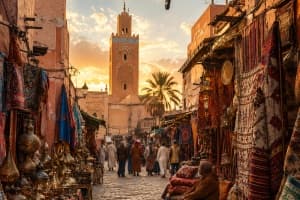
marrakech, Morocco
Hiring a private driver for a Morocco road trip
A private driver can make the biggest difference on routes that include several sightseeing stops. The drive from Marrakech toward the Sahara passes mountain scenery, kasbahs, valleys and towns worth visiting, so the ability to stop safely for photographs or lunch can turn transport into part of the holiday. A driver also removes the need to navigate traffic or find parking in unfamiliar places. For many families and travelers with limited mobility, the flexibility can be especially valuable.
Before booking, ask whether the quoted price includes fuel, driver accommodation, tolls, parking and airport transfers. Confirm the planned daily route, approximate drive times and type of vehicle. A professional driver and an official local guide do not always provide the same service, so ask if guided historic visits are included or arranged separately. Avoid itineraries that promise too many distant stops in one day; a private car cannot shorten the mountains or remove the need for rest.
- Ask for a written list of what the vehicle price includes.
- Choose a realistic itinerary instead of the maximum number of stops.
Renting a car: Freedom with responsibility
Renting a car can be useful for travelers who enjoy independent road trips and are comfortable driving abroad. It gives you control over departures, lunch stops and smaller destinations, particularly away from the busiest city centers. Before booking, check licensing requirements for your nationality, insurance coverage, excess charges and the condition of the vehicle. Read what the rental agreement says about driving on unpaved tracks; not every car is suitable for every road.
Driving in old medinas is rarely the enjoyable part of a holiday. Many lanes are pedestrian-only or too narrow for cars, and parking may be some distance from your accommodation. In mountain regions, road conditions and weather can change; on rural roads, animals or slow vehicles may appear unexpectedly. Plan more daylight driving and avoid treating unfamiliar remote tracks as shortcuts. If your route mainly connects large cities, a combination of trains and local transfers may be simpler.
- Check insurance and permitted road types before paying.
- Prefer daylight travel for unfamiliar mountain roads.
How to reach Merzouga and the Sahara Desert
Merzouga is not on the main passenger railway network, so reaching the dunes generally involves a road journey for at least the final part of the trip. Travelers often arrive from Marrakech, Fes, Errachidia or another southern gateway. The experience varies depending on the route: one journey may cross the High Atlas, while another passes Middle Atlas landscapes, the Ziz Valley and oasis towns. Both can be rewarding when you allow enough time for the distance.
If you arrive by plane to Errachidia or travel by bus toward the region, ask the camp or tour operator exactly where the transfer begins. Desert camps may need a separate vehicle journey from Merzouga village, and that transfer should be arranged before arrival. Some tourists choose camel trekking for the final approach, while others prefer a 4x4 transfer. Confirm what is included, especially if you are arriving late or traveling with children or heavy luggage.
- Confirm the last transfer from Merzouga to your camp.
- Avoid planning long Sahara transfers immediately after a late flight.
Transport costs: Compare value, not only ticket price
Train and bus tickets can be cost-effective ways to move between cities, especially for solo travelers. Yet a lower ticket price does not always mean a cheaper overall day once taxi rides, luggage handling, station transfers and extra accommodation are counted. A private vehicle costs more but may save time and combine transport with planned sightseeing. For a group sharing the vehicle, the difference can become smaller.
Do not rely on a fixed price table found in an old blog post. Fares, fuel costs and services change, and costs depend on season, booking time and route. Compare actual quotations for your travel dates and read cancellation conditions. Ask whether entrance tickets, meals and tips are included; otherwise you may be comparing offers that look similar but cover different things. The best choice balances money with convenience, comfort and the experience you want.
- Compare the full journey cost, not only the main ticket.
- Check refund and cancellation terms before booking.
A simple transport plan for your first visit
For a first trip focused on cities, consider using trains where the route makes sense, then short taxis or prearranged transfers to reach your riad. If your itinerary includes Chefchaouen, Essaouira or mountain villages, a coach or road transfer may be needed. Travelers who want a long desert circuit can choose a guided road journey for that section while using public transport before or afterward. Combining methods is often easier than forcing one transport style onto the entire trip.
Leave buffer time whenever you change transport modes. A long-distance bus that arrives late should not be followed by a flight departure only minutes later. Keep offline maps, your accommodation phone number and a little cash available. Most importantly, choose a route that allows you to enjoy where you are going. Morocco has memorable scenery between cities, and the journey is often part of the holiday rather than an inconvenience to get out of the way.
- Use trains for practical city connections and road vehicles for remote areas.
- Build extra time into travel days and transfer connections.
Keep planning your Morocco trip
Explore more local travel guides or ask Moorish Tour about a private route designed around your interests, dates and preferred pace.
Frequently Asked Questions
Can I travel around Morocco without renting a car?
Yes. Major-city rail links, coaches, taxis and organized transfers make many routes possible without a rental car.
Does the train go to Merzouga?
No. Reaching Merzouga requires road transport for the final part of the journey.
What is the best transport for a Marrakech to Merzouga tour?
A road journey with a private or shared tour is common because there are mountain passes, kasbahs and valleys along the way.
Are taxis expensive in Morocco?
Prices vary by city, distance and service. Use the meter where applicable or agree on the fare before traveling.
Where can I check Morocco train schedules?
Check the official ONCF website for current routes, ticket options and timetables.
You may also enjoy
 Travel guide
Morocco in Winter: Weather, Packing & Best Places to Visit
Planning Morocco in December, January or February? Learn about winter weather in Marrakech, Fes, the Atlas Mountains and Sahara, plus what to wear and where to go.
Travel guideMarrakech Souks Guide: Shopping, Prices & Local Tips
Explore the Marrakech souks with confidence: what to buy, how bargaining works, where to find crafts, and practical tips for a relaxed medina visit.